 Water where it shouldn't be
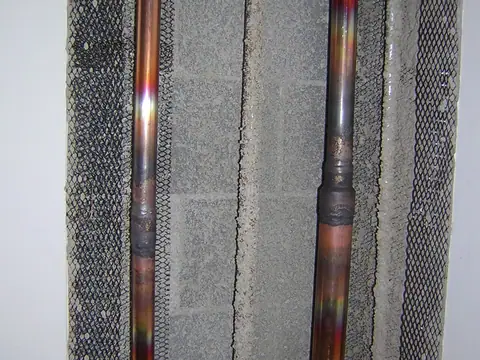
 Pipes that might be old
 A freeze is coming (AI picture)
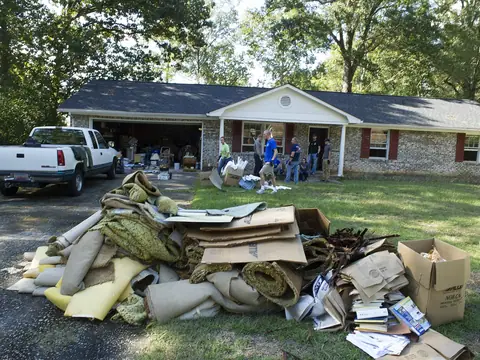 After a flood
 A smell you can't place
 Who to call and what they need
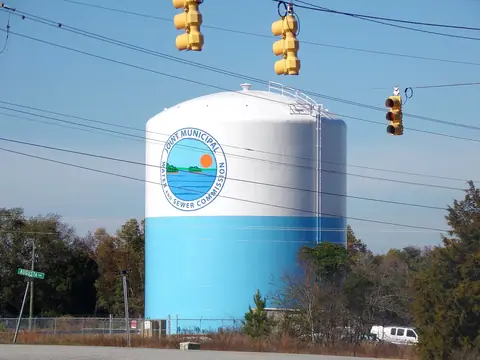 Whose water, town by town
 Every picture on the walk
Under the house, stop 1 of 7
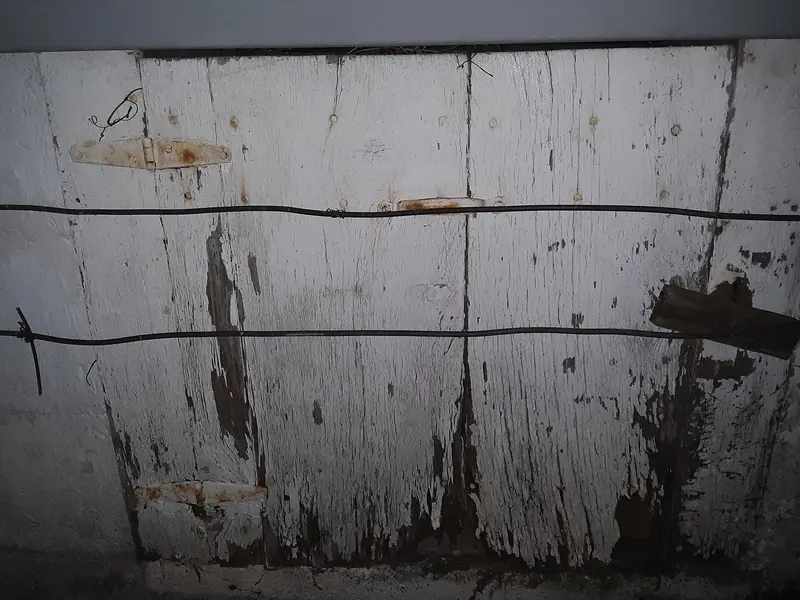
What to look for from the crawlspace hatch
Crawl space plumbing gives most of its clues from the hatch: wet dirt under a joint, fallen insulation, the type of pipe, and where a valve sits. Bring a flashlight and stay at the opening. Your job is to look, then pass on what you saw.
Kneel at the crawlspace hatch with a flashlight, and keep your body outside the opening.
Updated , Midlands House Walk
Stay out if you see standing water, sewage or live wiring. A whiff of gas or propane at the hatch changes the job: walk away from the house first, leave the switches alone, make no calls indoors, and phone 911 and the gas company or propane supplier once you’re outside5.
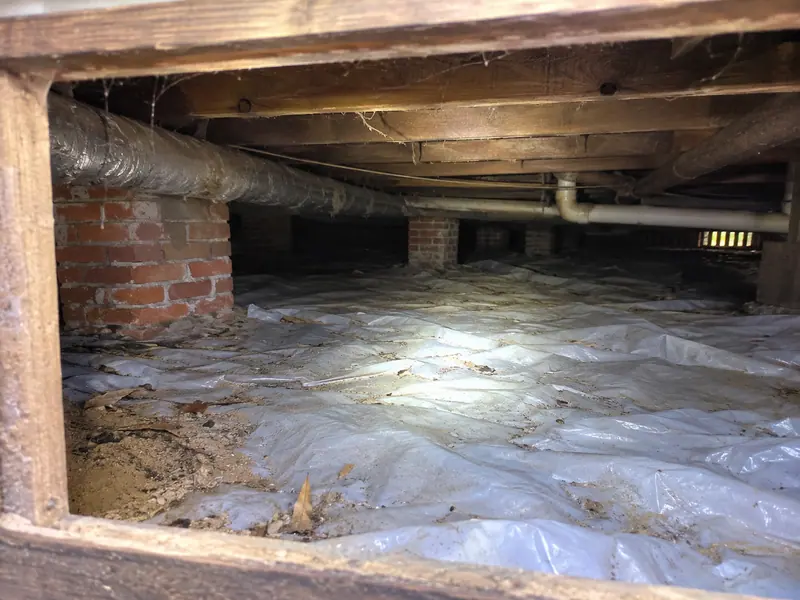
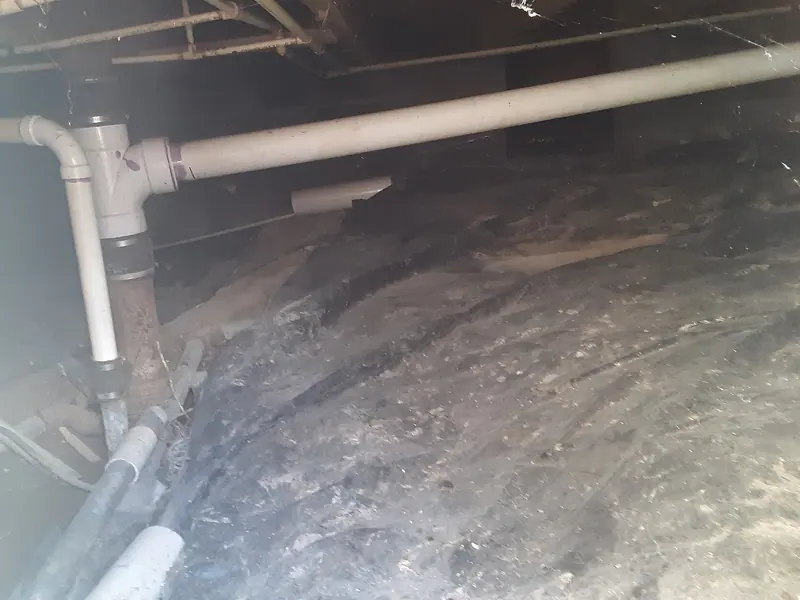
Is the dirt dry under the joints?
- Look for
- Run the beam along the pipe and stop at each tee or joint. A dark patch directly below a fitting is the thing to photograph.
- What it tells you
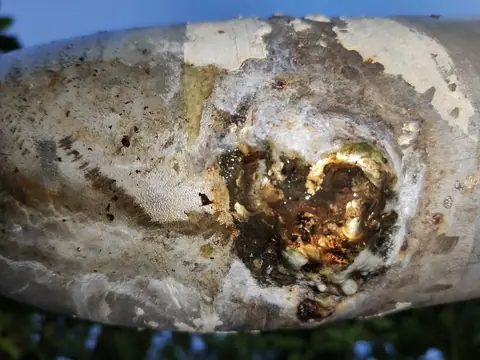
- A wet patch below a fitting suggests a drip, and EPA puts fixing leaks and seepage among the main ways to control crawlspace moisture1. Below a drain, treat it as possible sewage and go to water or sewage under the house.
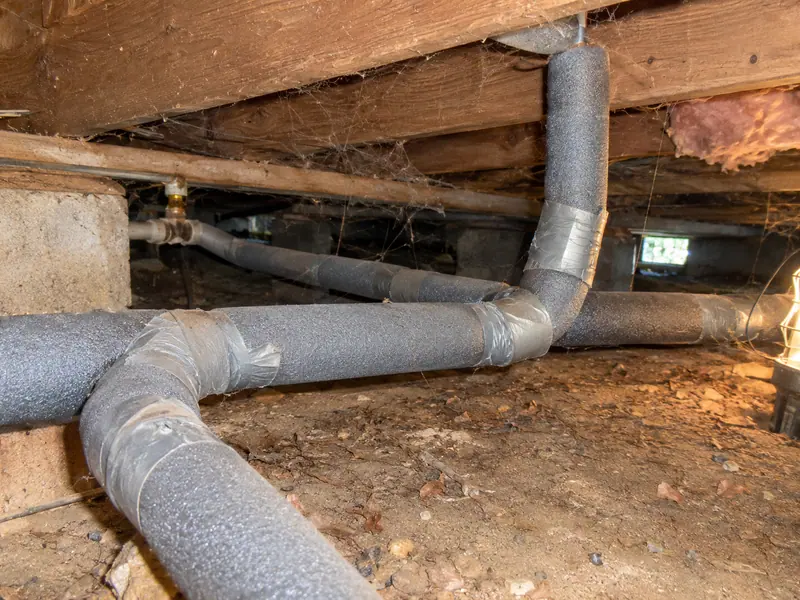
Is the foam still on the pipes?
- Look for
- Follow each line as far as the light reaches. Bare stretches, hanging sleeves and foam lying on the dirt are easy to spot from here.
- What it tells you
- Clemson advises insulating both hot and cold lines in crawlspaces2. Bare stretches are where a hard cold spell may find you, and wrapping the pipes covers what matters.
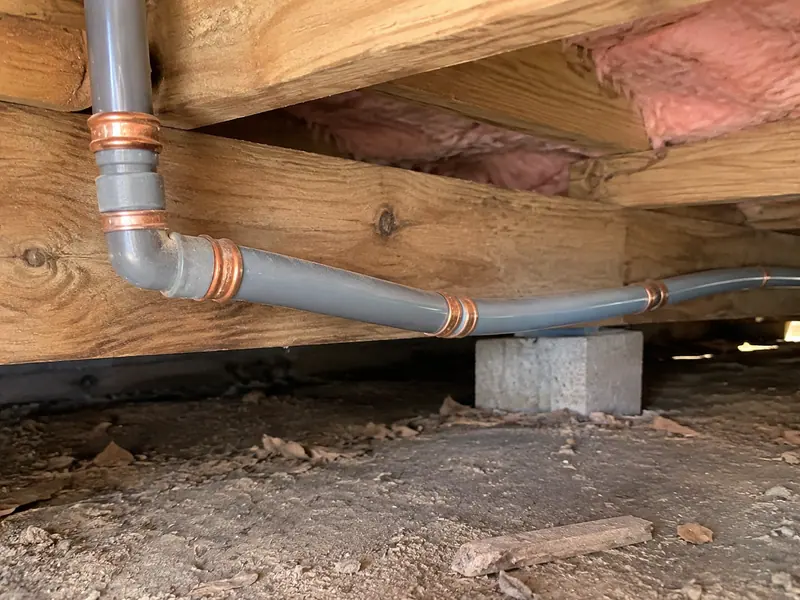
What are the pipes made of?
- Look for
- Note the color and whether the pipe is flexible or rigid. Flexible gray, silver or blue is one group. Rough threaded metal with rust is another.
- What it tells you
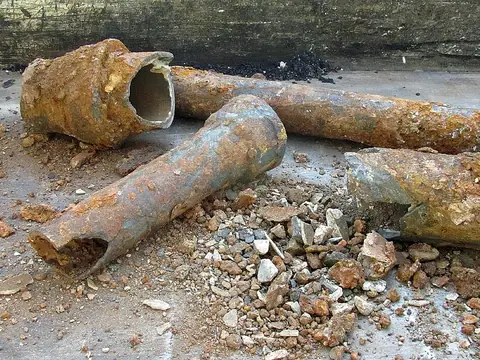
- Flexible gray, silver or blue pipe could be polybutylene, which a plumber should confirm3. See gray plastic pipe for that and old galvanized pipe for the rusty kind.
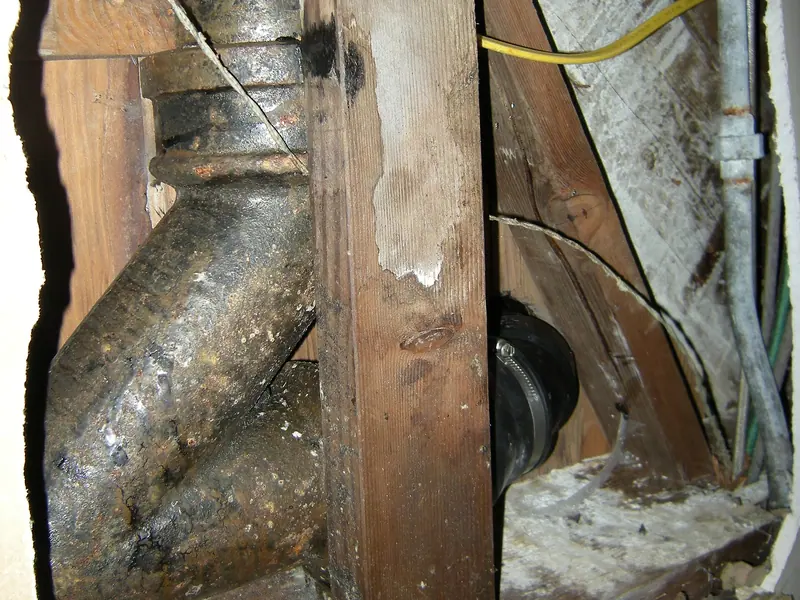
Which way does the big pipe go?
- Look for
- Find the fattest pipe you can see and note which wall it heads for. You only need the direction, so take it from the hatch.
- What it tells you
- On a septic house, Clemson suggests tracing the 4-inch sewer pipe outward from the crawlspace to find the tank4. The wall it leaves through is your start for finding the septic tank.
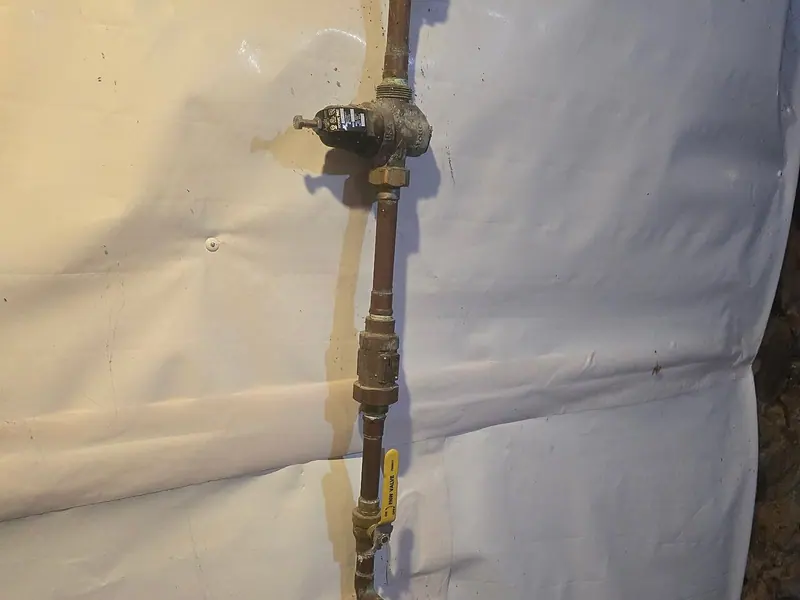
Can you see a valve from here?
- Look for
- Look where the water line enters the house, and on the foundation wall nearest the street. A lever or small wheel is what you want.
- What it tells you
- Clemson lists near the foundation, at the meter and above the water heater as common shutoff spots2. A valve you can only reach by crawling is worth raising with a plumber, and the house shutoff stop shows the other places to check.
How close do you need to get?
Close enough to see, and no closer. Everything on this page can be read from the opening with a good light. If something is out of sight around a pier, that is a question for whoever goes under, and old pipes lists what to ask.
Yours to do
- Look in from the hatch in daylight, and take phone photos of anything wet or hanging loose.
- Write down the pipe types you can see and which wall each main line runs toward.
- Note the date and the weather, so you can compare the same view after a heavy rain.
For a licensed pro
- Tracing and repairing anything wet under a fitting, since that work happens inside the crawlspace.
- Confirming what a pipe is made of when the look alone doesn’t settle it.
- Replacing fallen insulation around wiring or in tight runs you can’t reach from the opening.