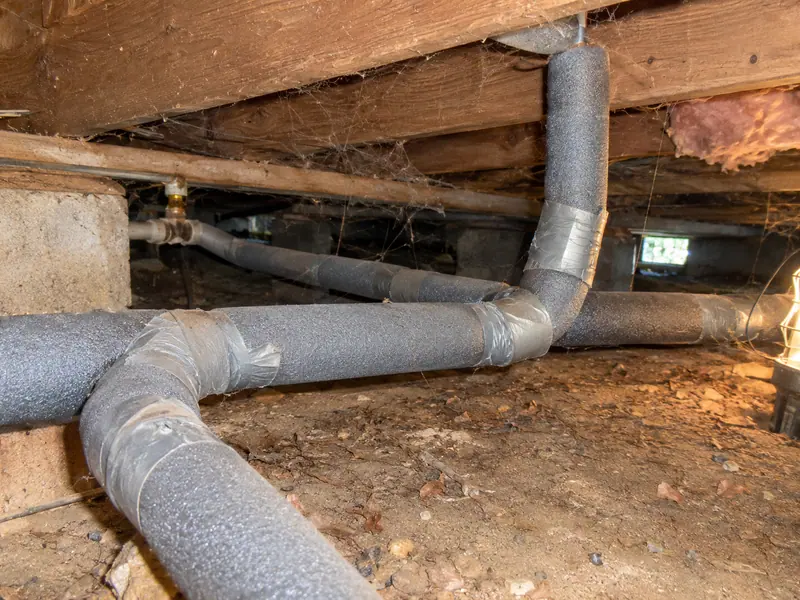
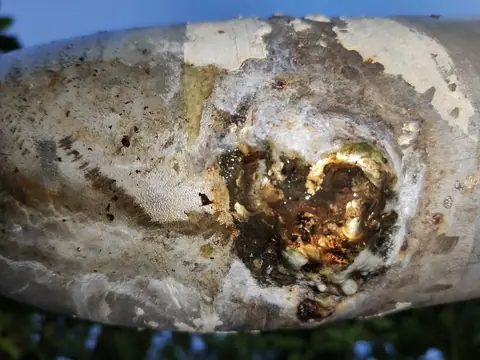
 Water where it shouldn't be
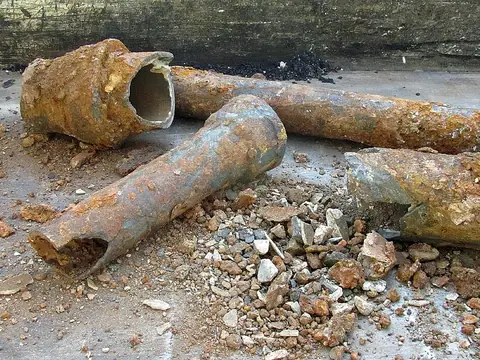 Pipes that might be old
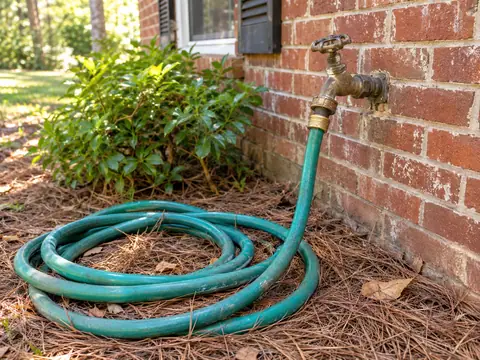 A freeze is coming (AI picture)
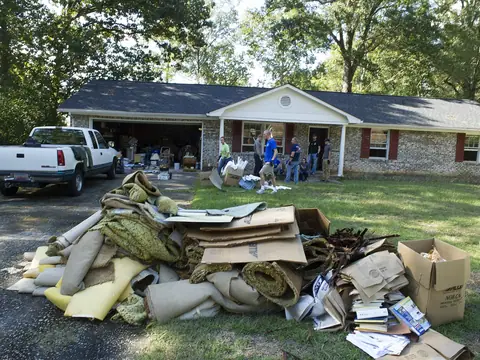 After a flood
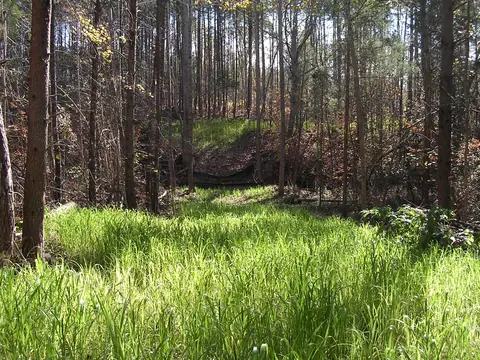 A smell you can't place
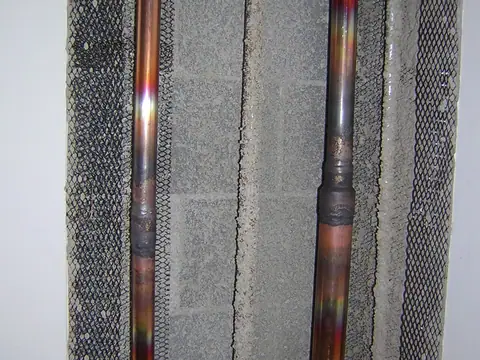 Who to call and what they need
 Whose water, town by town
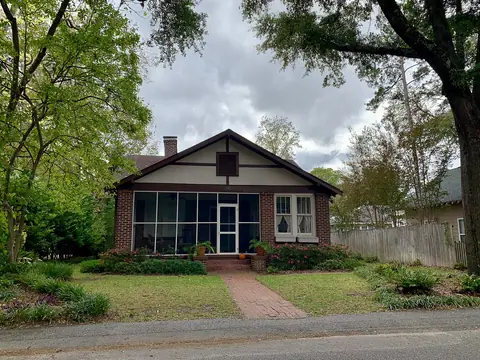 Every picture on the walk
Under the house, stop 2 of 7
Why a Midlands crawlspace stays damp
A damp crawl space usually comes down to things EPA’s moisture advice points at: bare dirt, poor airflow, and leaks or seepage1. In the Midlands, a clay layer under sand can also move rainwater sideways2. Look from the hatch first, because the fix depends on which one you’ve got.
Kneel at the crawlspace hatch a day after a good rain, and shine a light across the ground.
Updated , Midlands House Walk
Standing water under the floor is a different job from damp. Don’t go in. Start with water or sewage under the house instead.
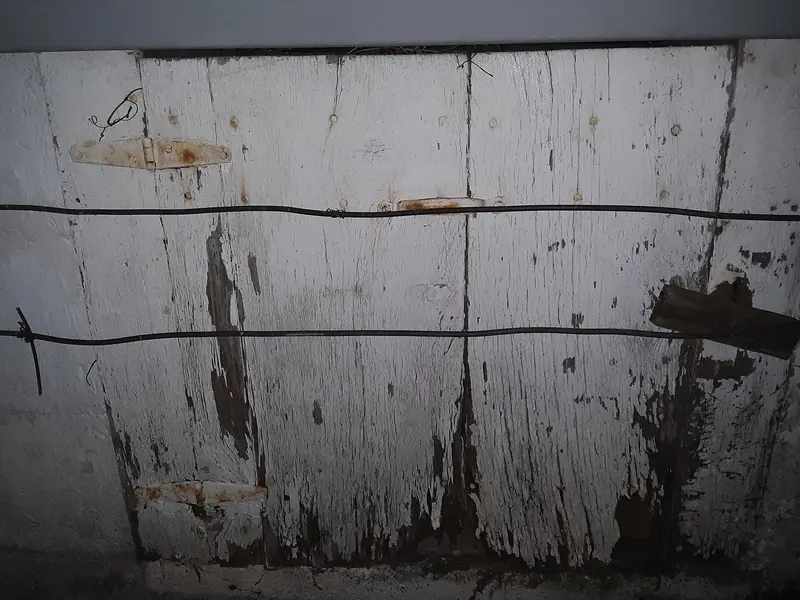
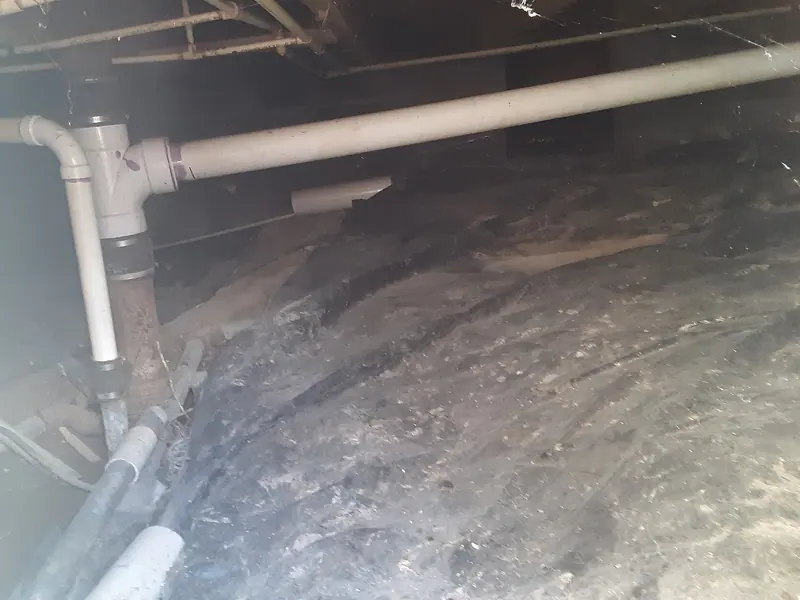
Is the ground bare?
- Look for
- Check whether you can see open soil, and whether it looks darker than the dirt near the vents. Bare soil across the whole space is common in older houses.
- What it tells you
- EPA advises a plastic cover over the dirt in a crawlspace1. Bare ground keeps feeding moisture to the air under your floor, so this is often the first thing to bring up.
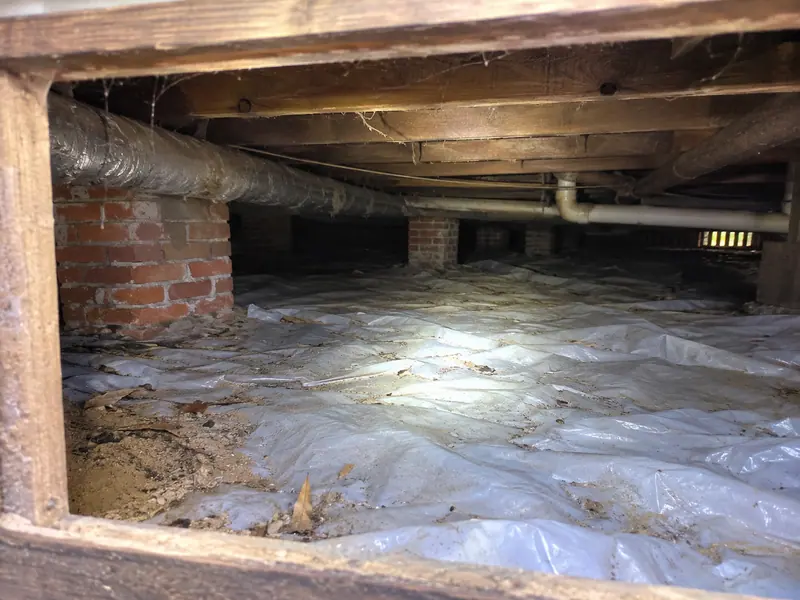
Is there plastic, and does it cover the dirt?
- Look for
- Sweep the light low across the sheet. Note torn spots, gaps at the edges, and any puddles sitting on top.
- What it tells you
- Clemson says 4 mil polyethylene covering 70 percent of the ground helps keep lumber from getting too moist3. Water pooled on top of the plastic points to a leak or seepage, and plastic alone won’t sort that out.
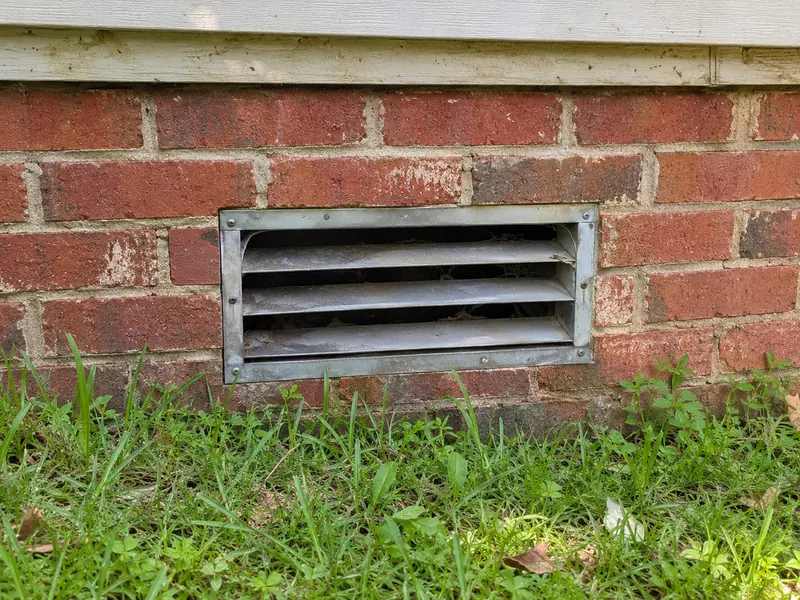
Can air get through?
- Look for
- Walk the outside wall and check each vent. Shrubs, leaves or mulch piled against one all block air in much the same way.
- What it tells you
- EPA says to keep crawlspaces well ventilated1, while Clemson says to close vents in winter and reopen them in spring4. Foundation vents goes through both seasons.
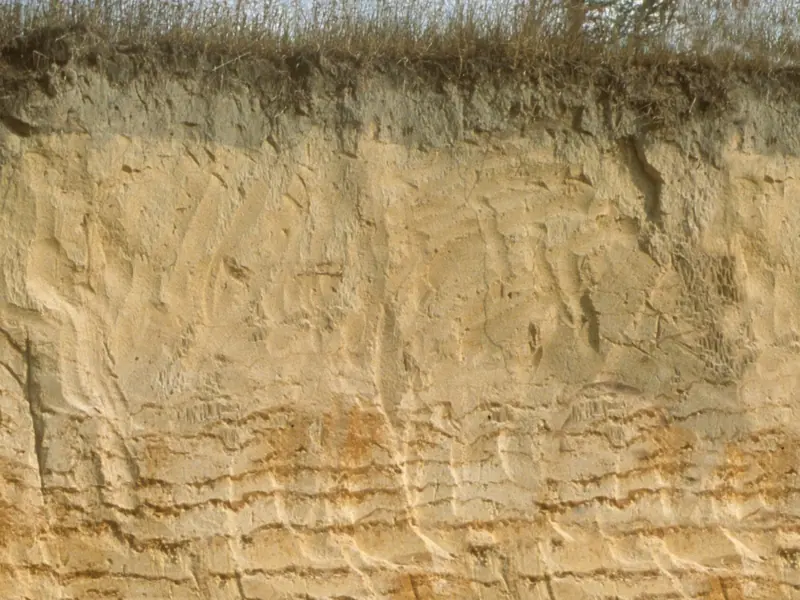
Does it get worse after rain?
- Look for
- Compare the same view on a dry week and the day after a storm. Fresh wet lines coming in from one wall are the thing to note.
- What it tells you
- SC DNR describes Sandhills soils with a finer clay hardpan below, where fast-draining water can move sideways2. Damp that follows rain and not plumbing use points away from the pipes. Midlands sand and clay shows the soils.
Can you paint over mold on the hatch?
No. EPA says not to paint or caulk over mold; clean it and fix the water problem, and wear an N-95 for the clean-up5. A small patch on a hatch door is one thing. Mold across the joists is a job to ask about before anyone starts.
Yours to do
- Clear shrubs, leaves and mulch away from the foundation vents.
- Reach a small humidity gauge just inside the hatch and read it over a few days. EPA’s aim is below 60 percent, ideally 30 to 505.
- Keep photos from the hatch on dry and wet days to show whoever comes out.
For a licensed pro
- Laying or repairing plastic, since that means working under the house.
- Finding the source of seepage or a leak you can see but can’t trace.
- Mold over 10 square feet, which EPA says calls for its guidance or a professional5.