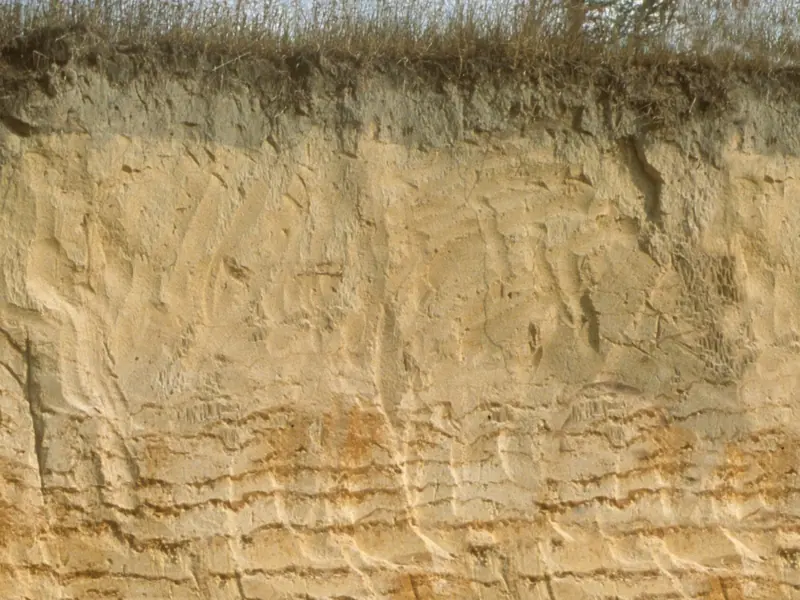
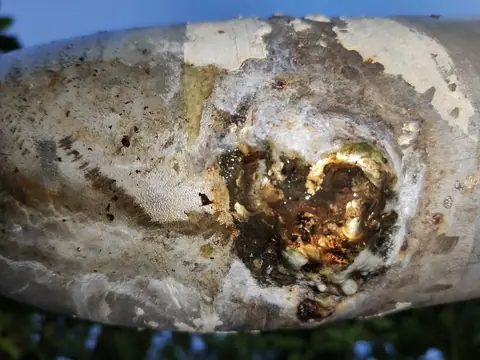
 Water where it shouldn't be
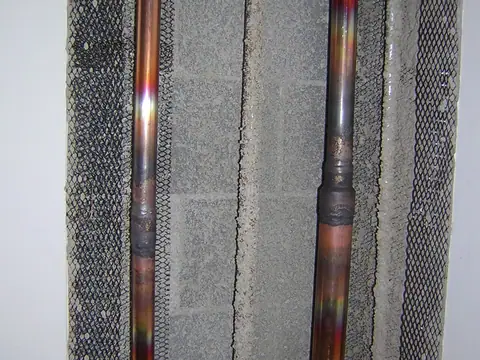
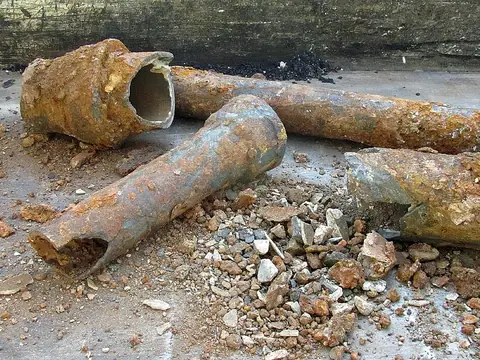 Pipes that might be old
 A freeze is coming (AI picture)
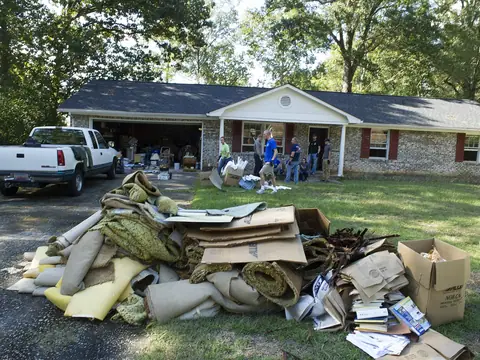 After a flood
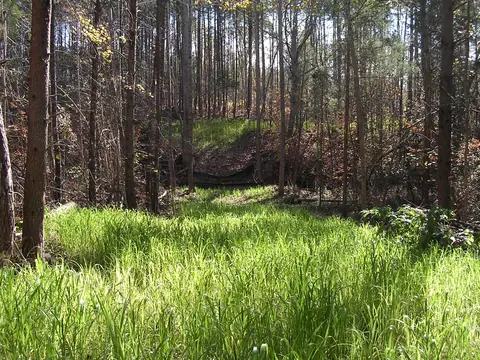 A smell you can't place
 Who to call and what they need
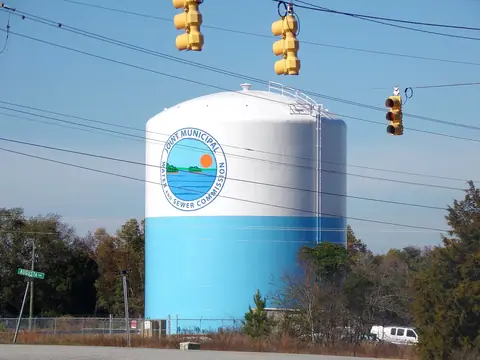 Whose water, town by town
 Every picture on the walk
Back yard, stop 1 of 7
Finding the septic tank in your yard
To find your septic tank, start with records and the previous owner, then trace the 4-inch sewer pipe outward from the crawlspace and walk that line, at least 5 feet out from the house1. Look for ground slightly higher or lower, or a lid. Finding it is the whole job; leave it shut.
Go to the wall where the big sewer pipe leaves the house, and walk slowly straight out across the yard.
Updated , Midlands House Walk
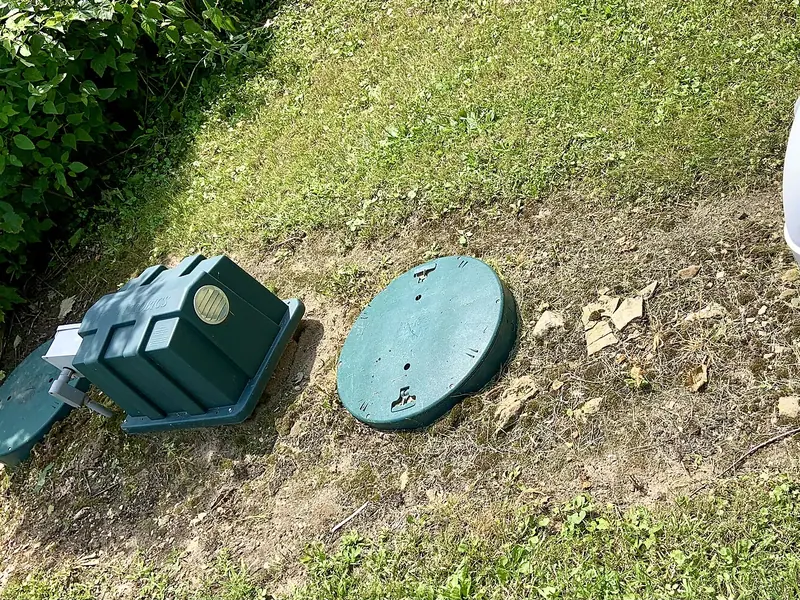
Once you’ve found the lid, stop. Never lift it and never lean over an open tank: fumes can make you faint, a flame nearby can cause an explosion, and old tanks can collapse3.
Which wall does the sewer pipe leave by?
- Look for
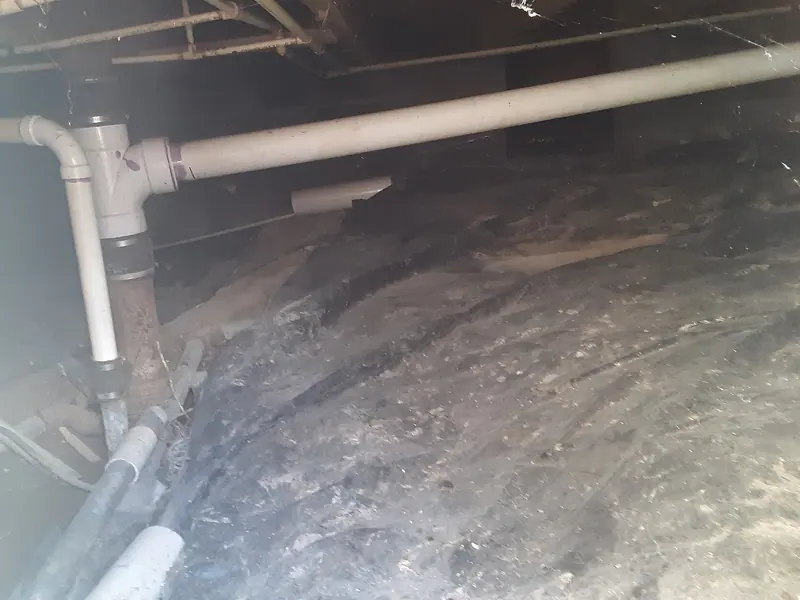
- Shine a light from the hatch and follow the fattest pipe to the wall. Then go around to that wall outside. There’s no need to go under the house to see the direction.
- What it tells you
- Clemson’s method is to trace the 4-inch sewer pipe out from the crawlspace1. The tank often sits at least 5 feet from the structure, so start your search past that mark.
What does the ground say?
- Look for
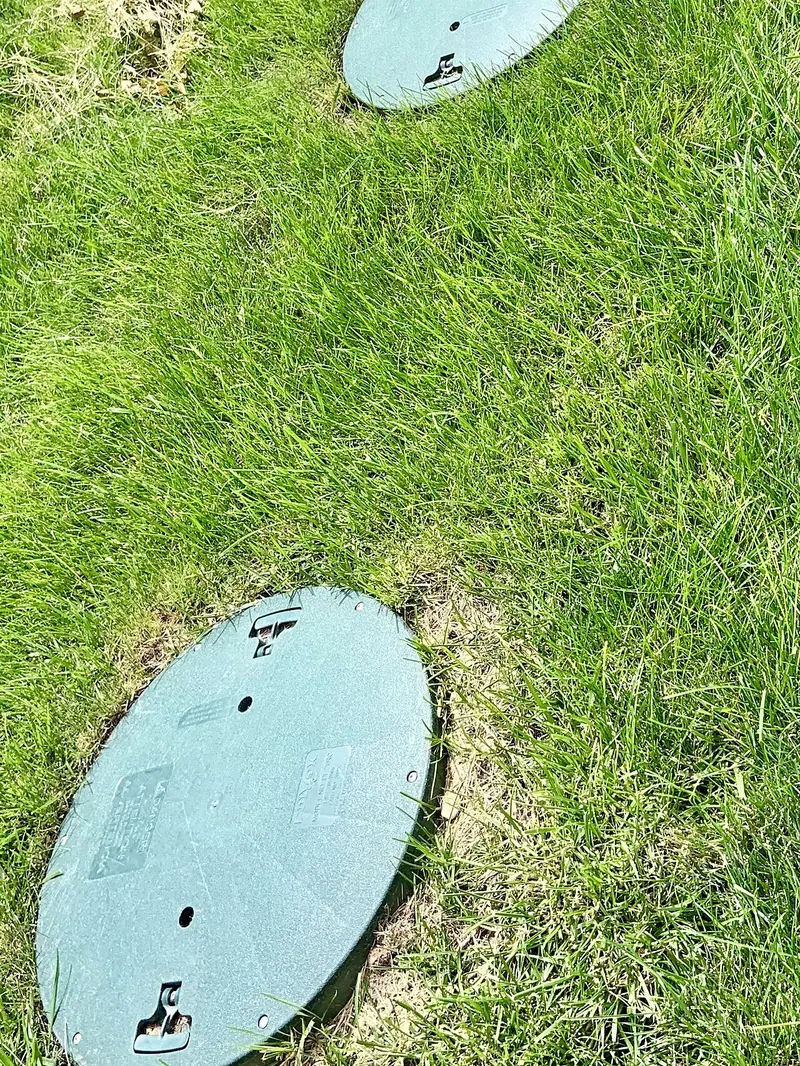
- Walk the line after a mow. Look for a low rise, a slight dip, or a round edge in the grass. Lids sit flush or may be under sod.
- What it tells you
- Clemson says the buried area may be slightly higher or lower than the ground around it1. Spots like these are clues only. Soggy patches on the same line are a different matter.
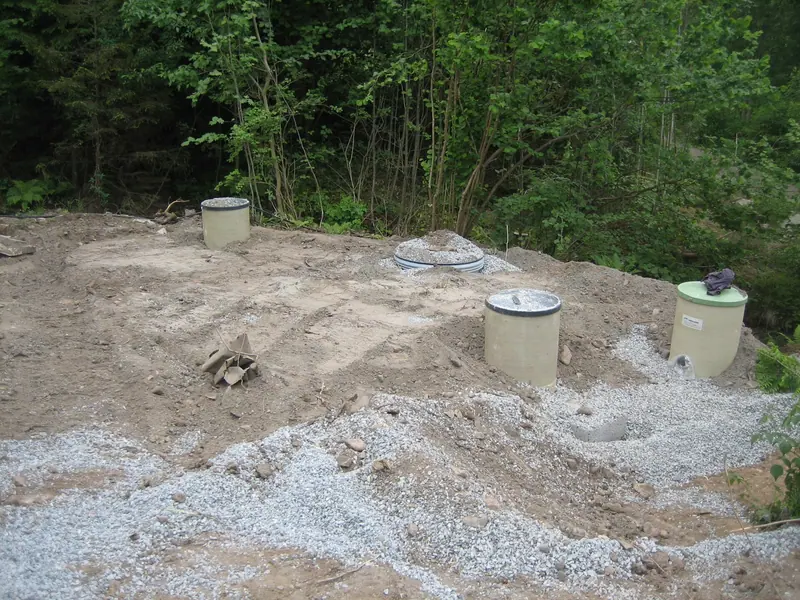
Is there a riser sticking up?
- Look for
- Check the edges of the yard and any bare ground near the woods. Risers bring the lid up to where a contractor can reach it.
- What it tells you
- A riser only tells you where the tank is. Treat it the same as a buried lid, and keep it closed. Septic care covers what to do once you’ve found it.
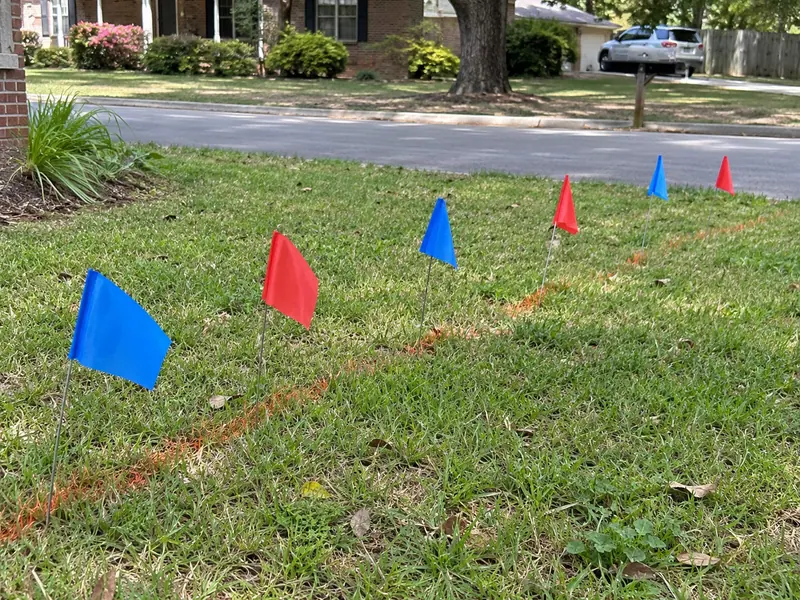
Tempted to dig or probe?
- Look for
- Before you put a shovel in the ground, think about what else is buried along that line. Water, gas and power may share the yard.
- What it tells you
- SC811 is free, needs at least three business days, and covers any size project2. Ask whether private lines get marked, since a line from your house to your tank may not be. Before you dig has the rest.
Why does it matter where it is?
Because the yard around it has rules. Clemson says not to drive, dig, build or plant deep-rooted plants over the system1. If you’re on a well too, 75 feet is South Carolina’s minimum between septic and well4, so measure it while you’re out there and bring up your well test if it looks short.
Yours to do
- Ask the previous owner, and check any paperwork that came with the house1.
- Ask SC DES whether it holds a record for your address. Clemson’s pages may still say DHEC.
- Sketch the spot on paper, with measurements from two corners of the house.