 Water where it shouldn't be
 Pipes that might be old
 A freeze is coming (AI picture)
 After a flood
 A smell you can't place
 Who to call and what they need
 Whose water, town by town
 Every picture on the walk
Under the house, stop 4 of 7
Gray plastic pipe: could it be polybutylene?
Polybutylene pipe is flexible gray, silver or blue plastic, put into an estimated 6 million homes and 3 million mobile homes from 1978 on, and it started leaking soon after1. Color alone doesn’t prove what you have. Note what you see and have a plumber confirm it.
Kneel at the crawlspace hatch with a flashlight, then go to the water heater and look at the lines above it.
Updated , Midlands House Walk
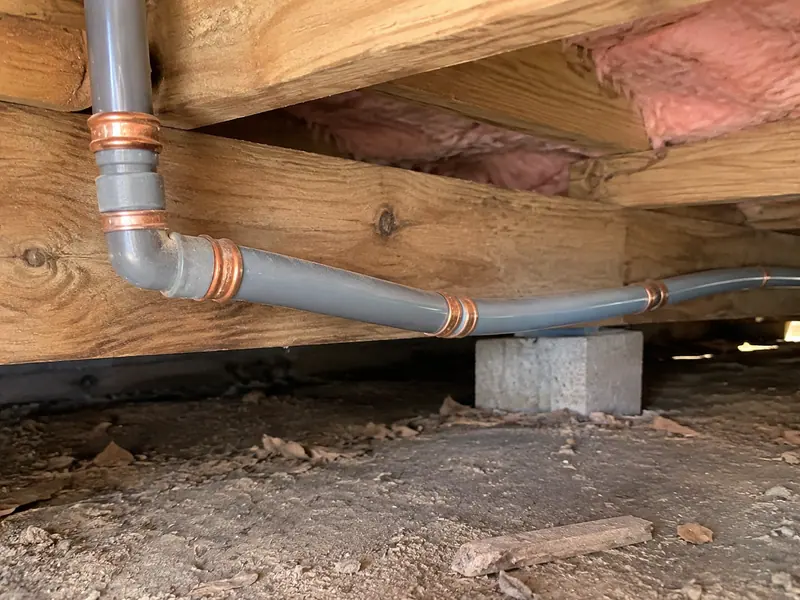
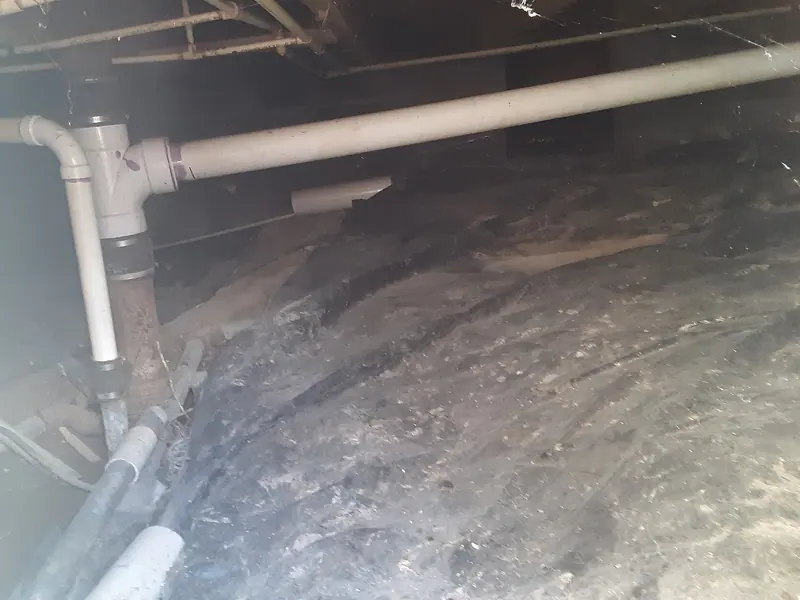
Is it a water line or a drain?
- Look for
- Compare widths. Water lines are thin, about the width of a thumb or less, and often flexible. Drains are fat and rigid.
- What it tells you
- Only the thin supply lines are in question here. A fat white drain doesn’t tell you anything about polybutylene, so keep looking along the joists.
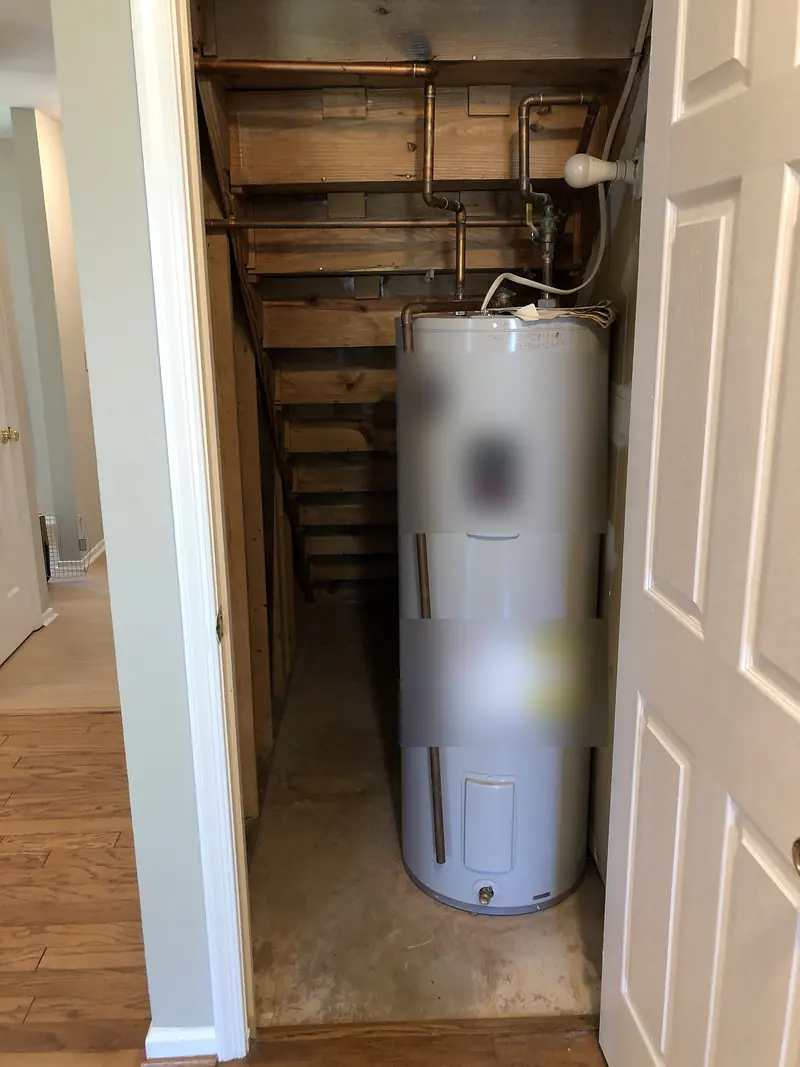
What's above the water heater?
- Look for
- Stand at the heater and look at the two water lines going up. Plastic there is easy to see without going near the hatch. Don’t touch the heater itself.
- What it tells you
- Copper at the heater doesn’t clear the rest of the house, since a plumber may have changed only that part. Gray plastic there is a good reason to look further and to read the old-pipes page.
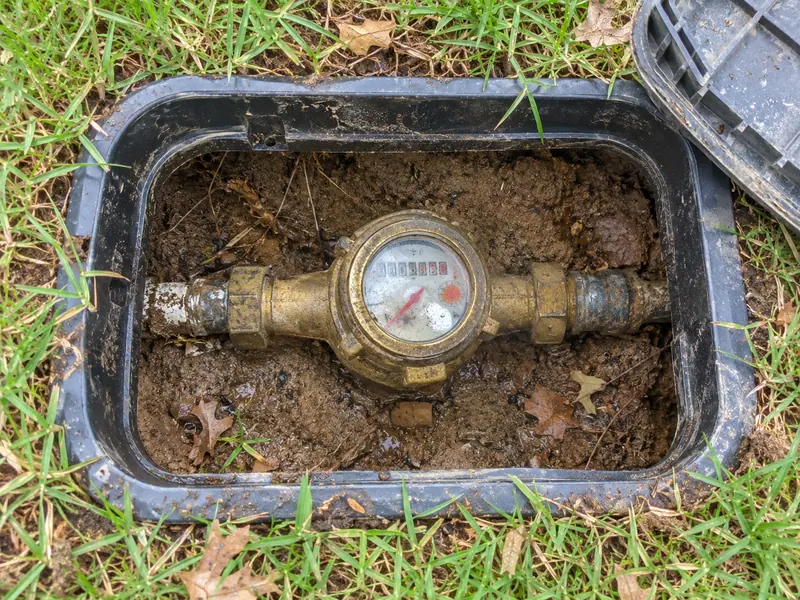
Is anything leaking right now?
- Look for
- Read the meter, use no water for 2 hours, and read it again2. If the number moved, something is running.
- What it tells you
- A moved number doesn’t mean polybutylene, only that water is going somewhere. It does make this a more pressing call. The meter leak test has the steps.
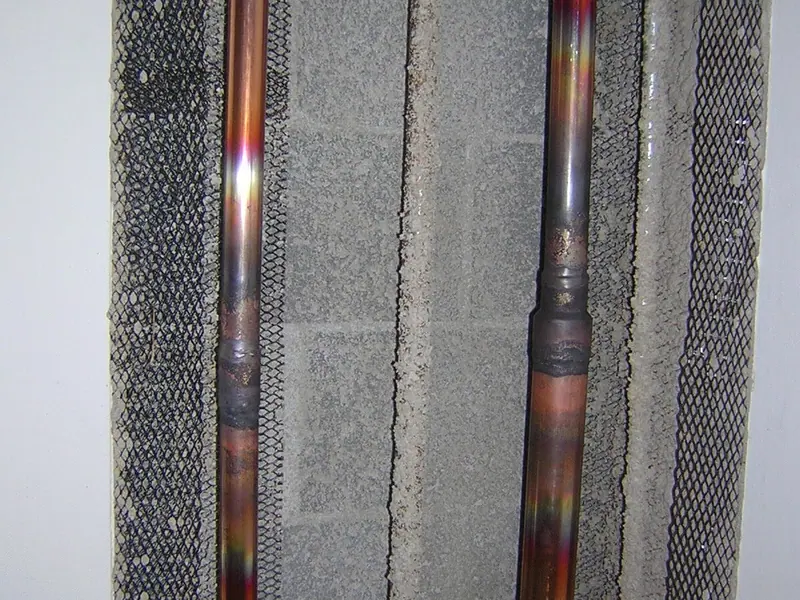
Has part of it already been changed?
- Look for
- Look for a spot where gray plastic meets newer-looking pipe. A change of material partway along the joists is worth a photo.
- What it tells you
- A partial repair is common sense after a leak, so more of the old pipe may remain. Ask the plumber to tell you where each material starts and stops.
Is there still a settlement you can claim from?
The 2000 law-firm paper behind these figures describes class actions and a settlement1. Whether any fund is open today hasn’t been checked here, so ask a lawyer before you count on it. Your home inspection report may say what the pipe is as well, along with the galvanized lines old houses often have.
Yours to do
- Photograph the pipe, the fittings and any printing on it, from the hatch.
- Run the 2-hour meter test2 and write down both numbers.
- Check a plumber’s license before anyone quotes you. Who to call points to the Commission’s license page3.
For a licensed pro
- Confirming what the pipe is. The color only gets you to the question.
- Repairing a leak or replacing the pipe, which Title 40 Chapter 59 generally requires a licensed or registered contractor to do above $5004. That is statute text as read, not legal advice; ask the Commission to confirm.
- Any work on a joint or crimp ring. Leave those to whoever replaces the section.