 Water where it shouldn't be
 Pipes that might be old
 A freeze is coming (AI picture)
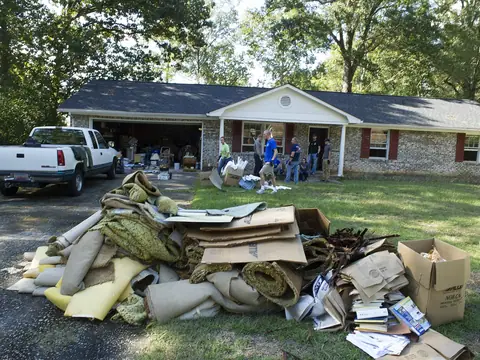 After a flood
 A smell you can't place
 Who to call and what they need
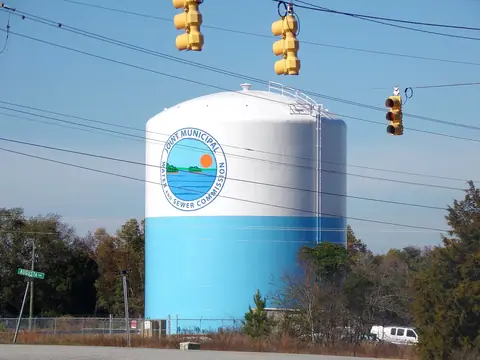 Whose water, town by town
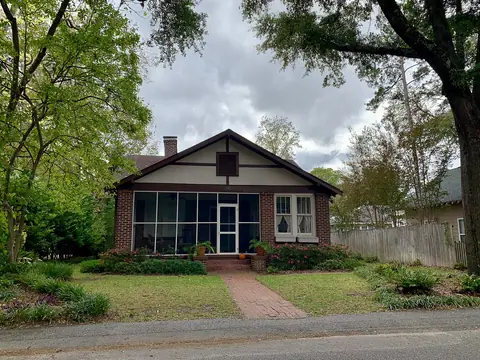 Every picture on the walk
Under the house, stop 6 of 7
No crawlspace? What a slab house shows from outside
Slab house plumbing stays mostly hidden, so read what shows outside: no foundation vents, a concrete edge at the ground, and pipes rising to the wall. Your water line from the meter to the building is still yours on Columbia Water’s map1. The walk here stops at the wall.
Stand at the corner of the house and walk the outside wall, looking low where the siding or brick meets the ground.
Updated , Midlands House Walk
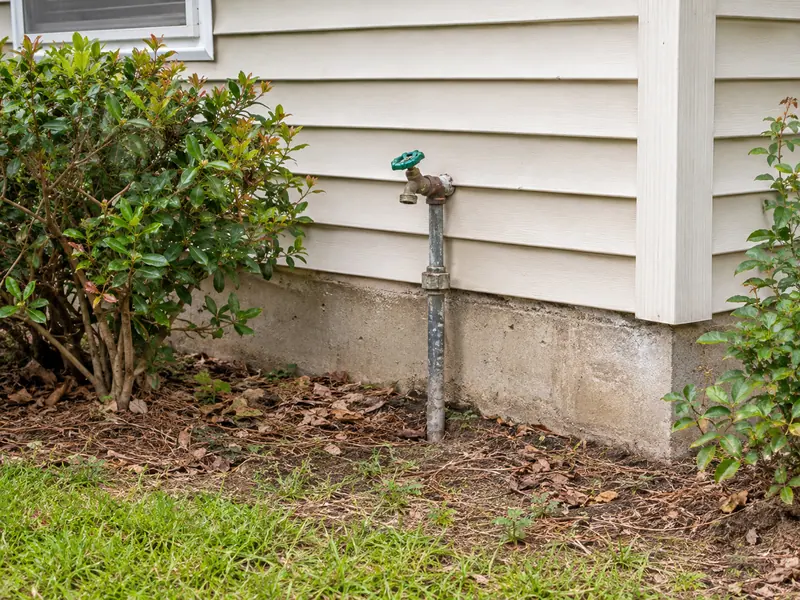
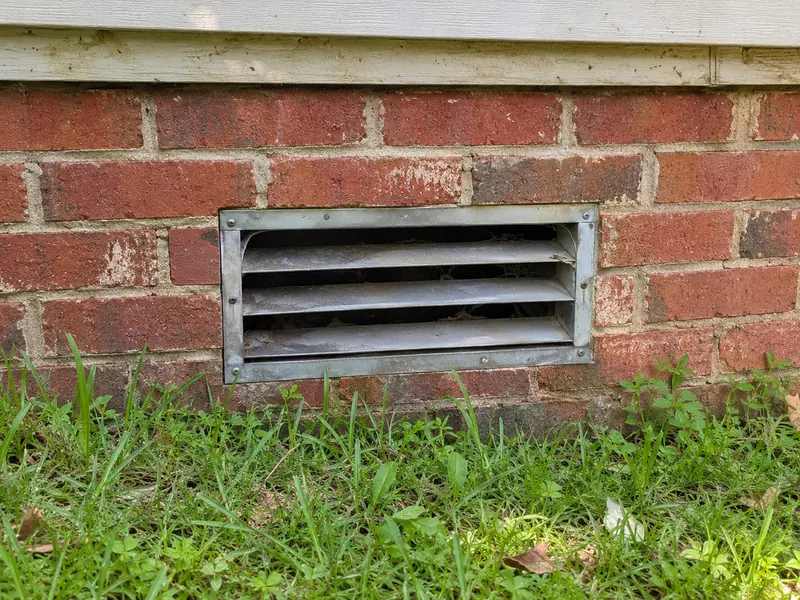
Is it really a slab?
- Look for
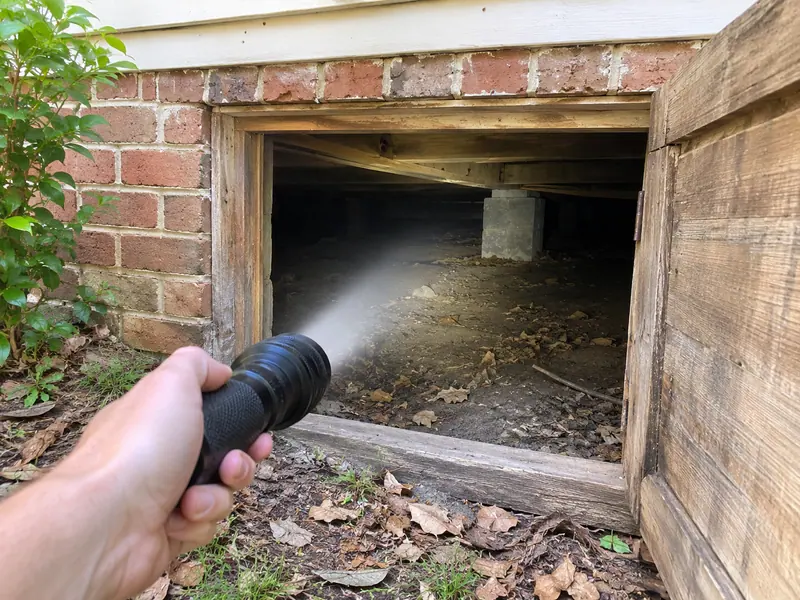
- Walk all four sides. Vents or a hatch mean a crawlspace, even if you’ve always heard otherwise. A bare concrete edge with no openings points to a slab.
- What it tells you
- If you find vents or a hatch, the crawlspace hatch stop is the one for you. On a slab, your checks stay outside and at the meter.
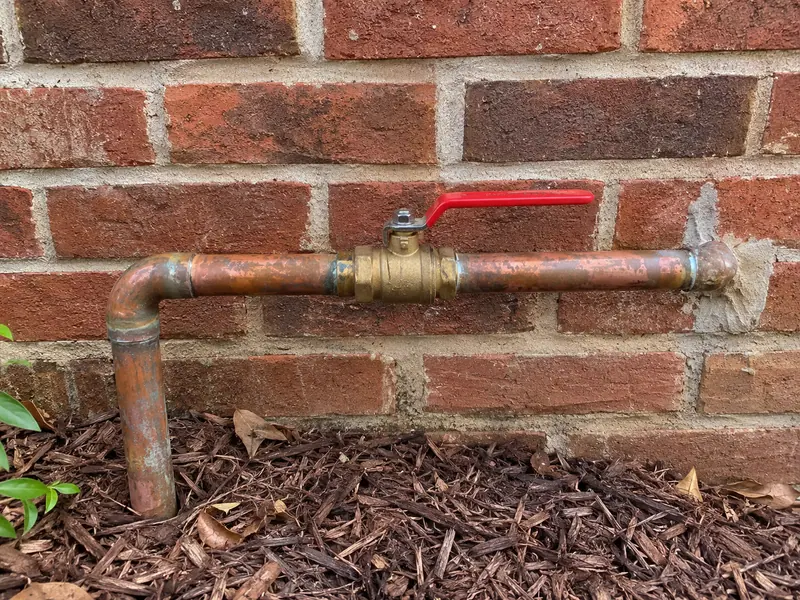
Where does the water come in?
- Look for
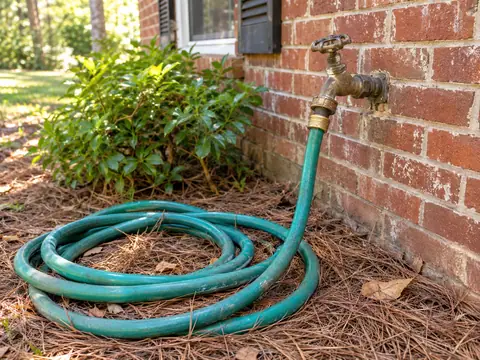
- Follow the line of the wall nearest the street. A pipe coming up from the ground, often with a valve, is where to look first.
- What it tells you
- Clemson lists near the foundation among common shutoff spots2. Test it before you need it. Your house shutoff has more places to look if this wall shows nothing.
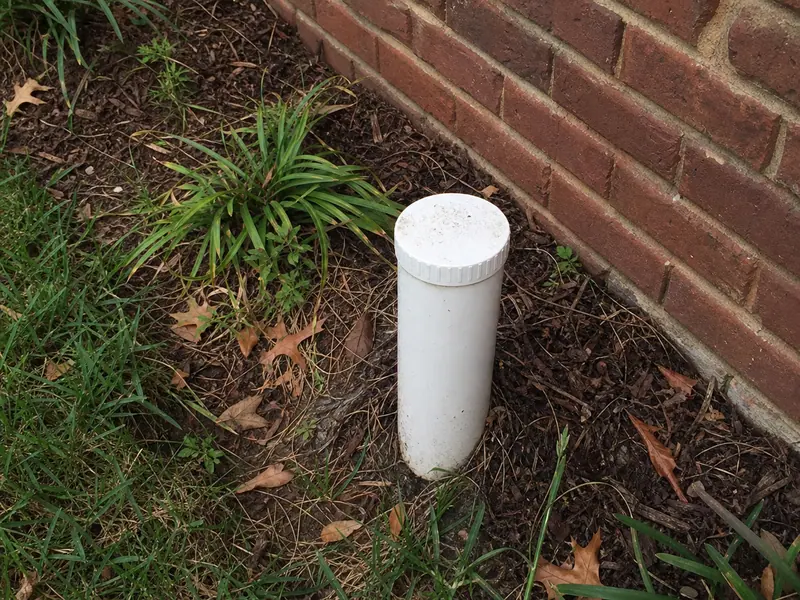
Is there a cap near the wall?
- Look for
- Check the bed along the wall, near a bathroom or kitchen side of the house. Don’t take the cap off.
- What it tells you
- With no crawlspace, a cap like this is one of the few parts of your sewer line you can see. Finding the cleanout explains what it’s for.
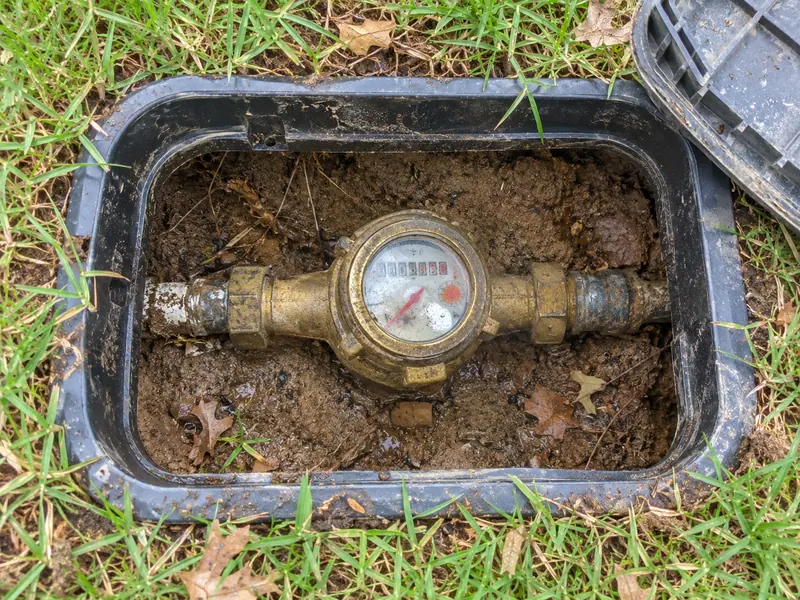
Is the meter still moving?
- Look for
- Read the dial, use no water for 2 hours, and read it again3. Looking at the dial is fine. Leave the meter and its valve alone.
- What it tells you
- A change with everything off means water is going somewhere you can’t see. That tells you to call a plumber, and it doesn’t tell you where. The meter test walks through it.
What if you think something's wrong under the floor?
Note what you saw and the meter numbers, then ask who to call. This walk doesn’t go under a slab, and what happens beneath the floor isn’t something you can read from the yard.
Yours to do
For a licensed pro
- Finding a leak once the meter says there is one. That’s a plumber’s job, with their own tools.
- Any cutting into a floor or slab.
- Repairs on the yard line between the meter and the house, if you’re on Columbia Water, because the city can’t repair private lines1.