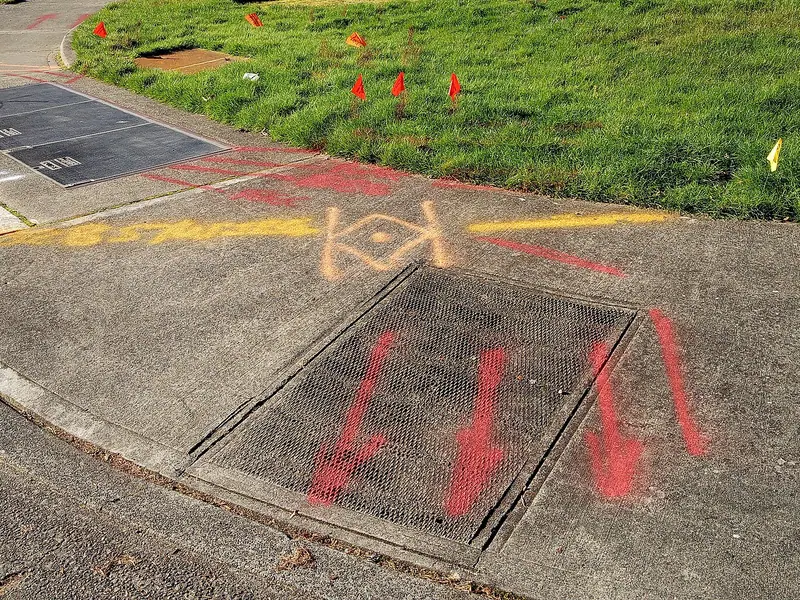
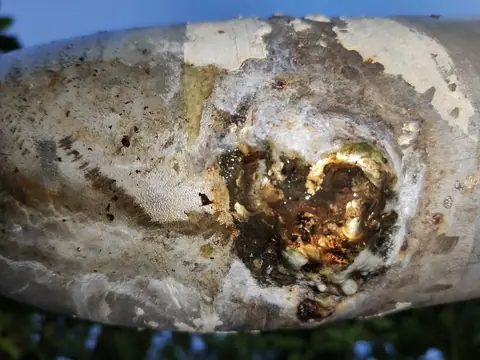
 Water where it shouldn't be
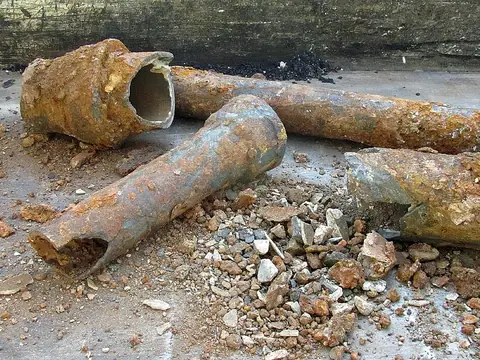 Pipes that might be old
 A freeze is coming (AI picture)
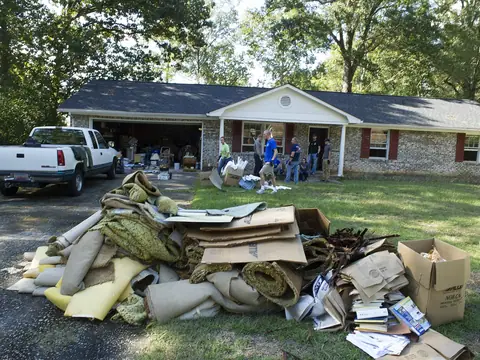 After a flood
 A smell you can't place
 Who to call and what they need
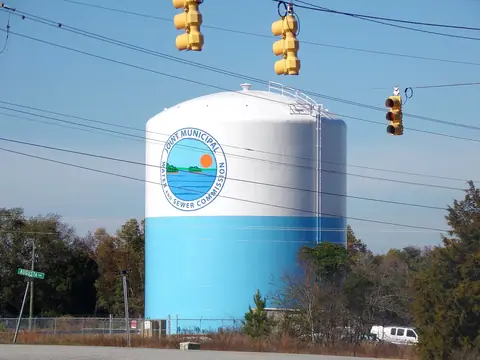 Whose water, town by town
 Every picture on the walk
At the street, stop 4 of 6
Sewage coming up a drain: the first hour
In a sewer backup, stop using water, stay out of the sewage, and keep away from any power near it1. Then work out whether the blockage is on your line or the public one, and report sewage on the ground to the utility right away2.
Go to the lowest drain in the house and look from the doorway, without stepping into anything wet.
Updated , Midlands House Walk
Stay out of the room if the sewage has reached outlets, cords or appliances. Never touch power while standing in water1. Leave a breaker alone if you would have to wade to reach it.
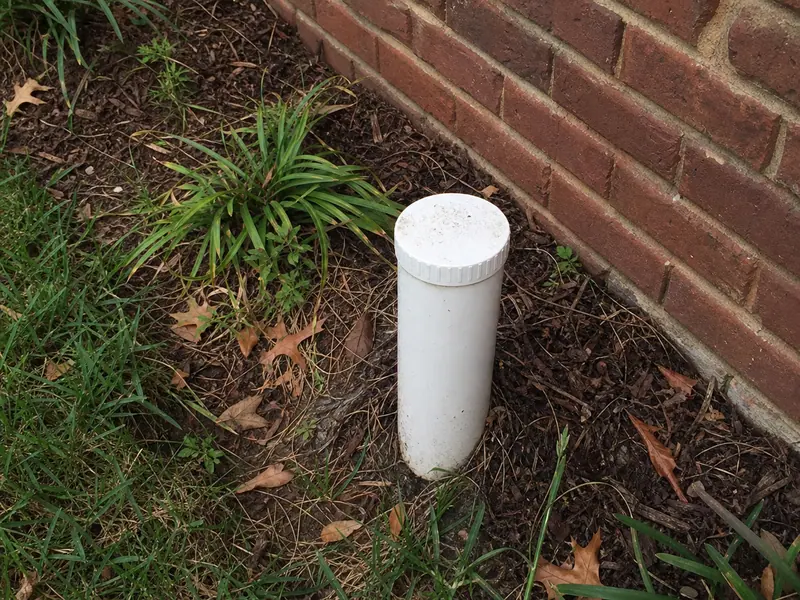
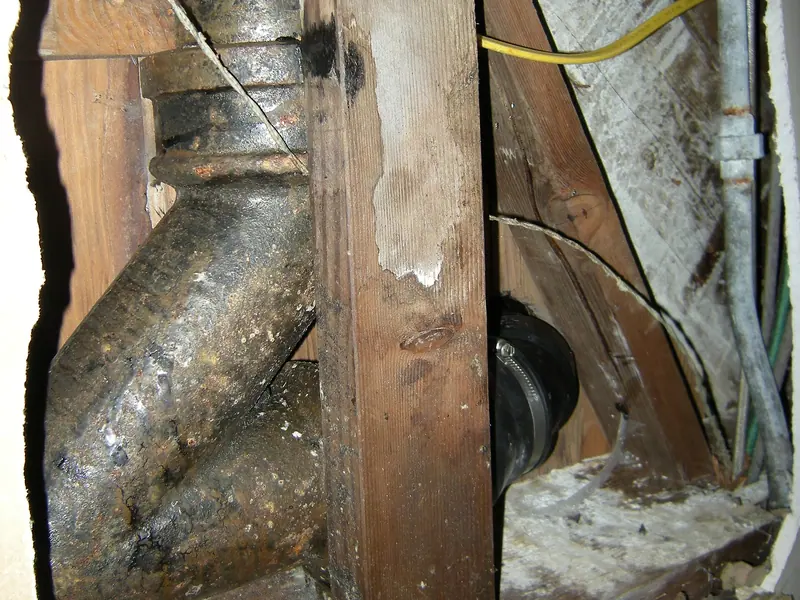
One drain, or all of them?
- Look for
- Think back without running more water. One slow sink is usually a local clog. A tub or floor drain gurgling when a toilet flushes is a different story.
- What it tells you
- Trouble at every low drain points past the branch lines to the main sewer line, the one a plumber clears from the cleanout.
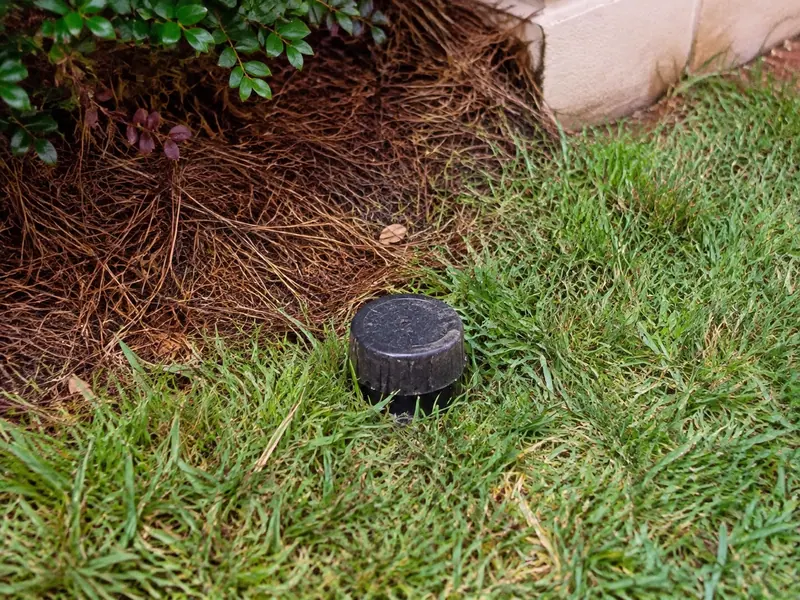
Is anything coming up outside?
- Look for
- From a distance, check around the cleanout and down the yard toward the street for wet ground or sewage.
- What it tells you
- Sewage on the ground is an overflow, and Columbia Water wants to hear about it right away, with your address or cross streets2. Whose side the blockage is on decides who clears it.
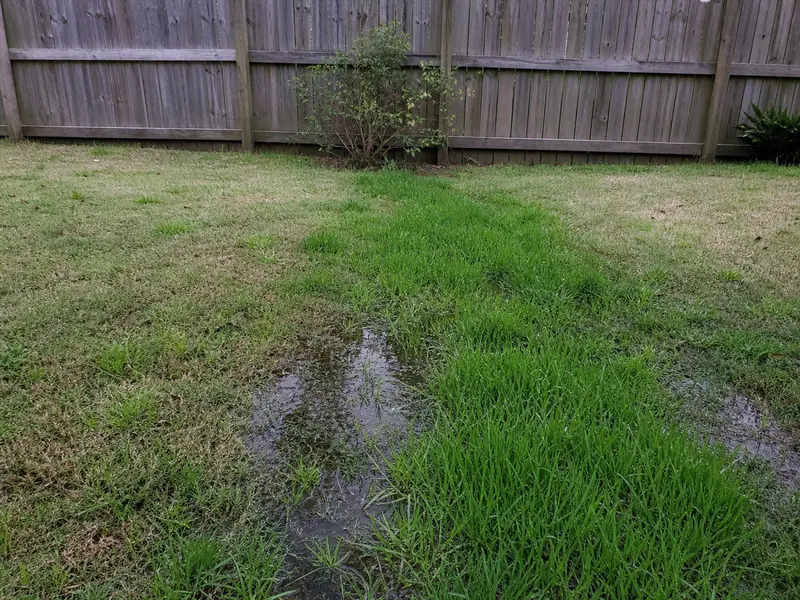
On septic, after heavy rain
- Look for
- Note how much rain fell in the past few days, and whether the ground over the field is soggy.
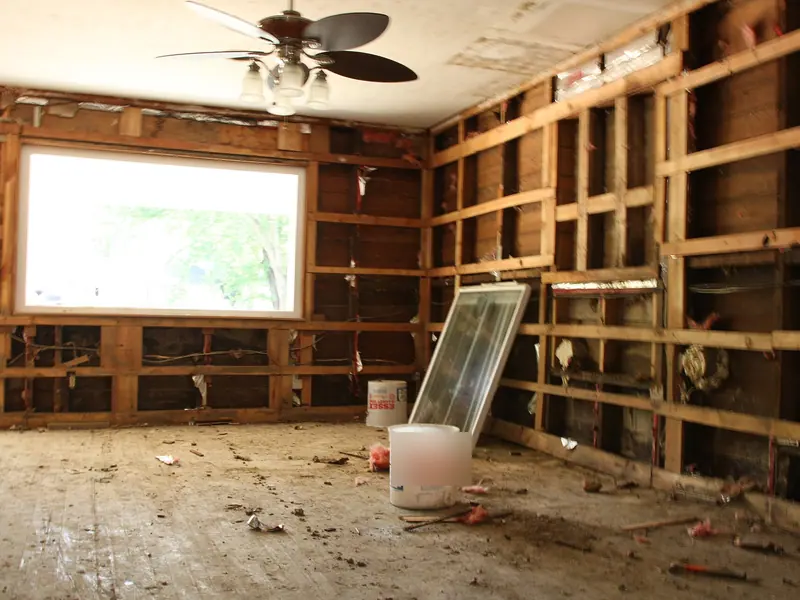
How far the wet has gone
- Look for
- From the doorway, note what it reached: floor, baseboard, rugs, walls. Take photos before anything moves.
What if it went under the house?
Don’t crawl in to look. Stay at the hatch and read water or sewage under the house. If the trouble is only a smell, start here.
Yours to do
- Stop the washer and dishwasher, and flush nothing until the line is clear.
- Keep children and pets out. If you have to go near it, CDC lists rubber boots, gloves and goggles1, which do not protect you from electric shock.
- Report sewage on the ground, and take dated photos of any damage. Columbia Water handles property-damage claims through its adjuster6.