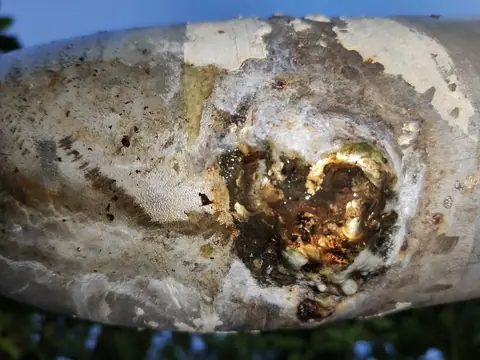
 Water where it shouldn't be
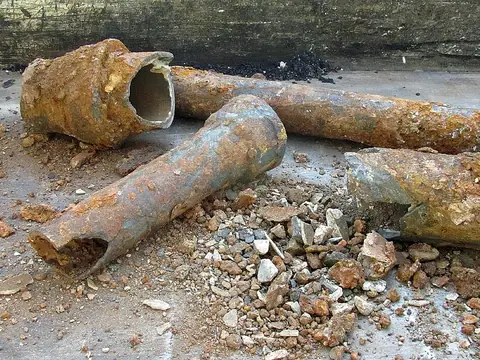 Pipes that might be old
 A freeze is coming (AI picture)
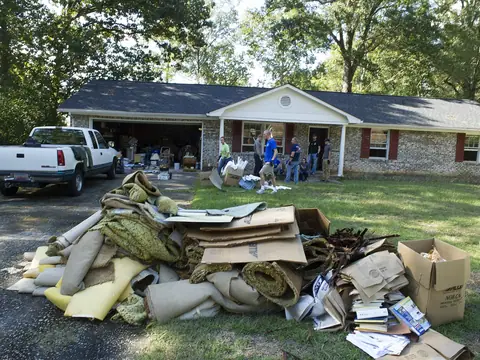 After a flood
 A smell you can't place
 Who to call and what they need
 Whose water, town by town
 Every picture on the walk
At the street, stop 5 of 6
Before you dig near a line: SC811
Before you dig in South Carolina, file with SC811 at least three business days ahead, not counting the filing day, weekends or holidays1. It is free and covers a project of any size. Ask whether private lines, like the water line across your yard, will be marked.
Stand where the shovel would go, and list everything you can see from there: meter box, cleanout cap, septic lid.
Updated , Midlands House Walk
If a shovel hits a line and you smell gas or propane, or a power line is struck, walk away from the house and the hole first. Touch no switches and make no calls from inside. Once you’re outside and clear, call 911 and the gas company or propane supplier.
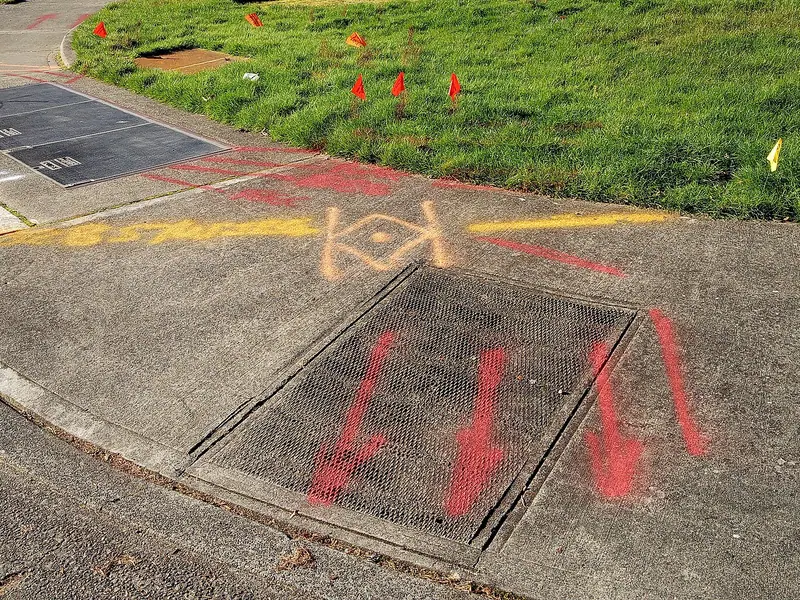
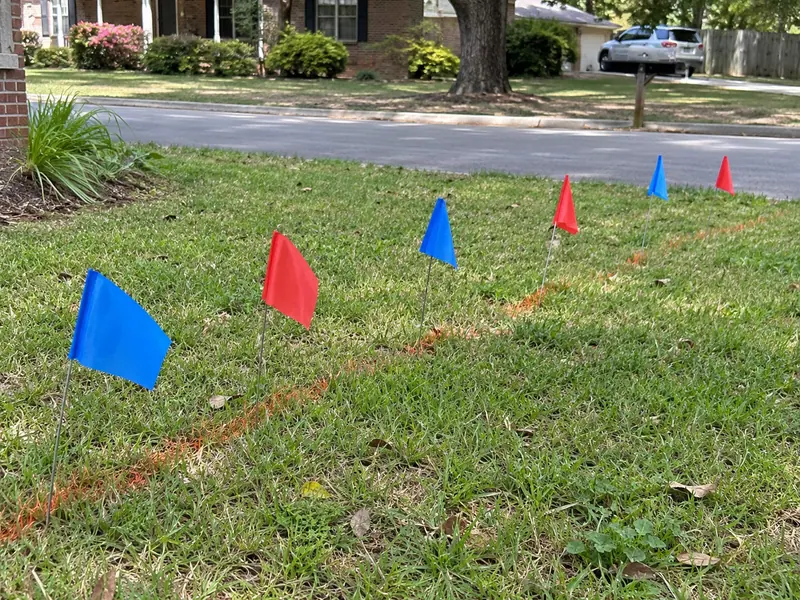
Flags across the lawn
- Look for
- Walk the flagged line and compare it with your planned hole. If you can’t tell what a color stands for, ask SC811 or the locator.
- What it tells you
- A mark means a line was located there. No mark doesn’t mean there is no line, so don’t treat bare grass as clear.
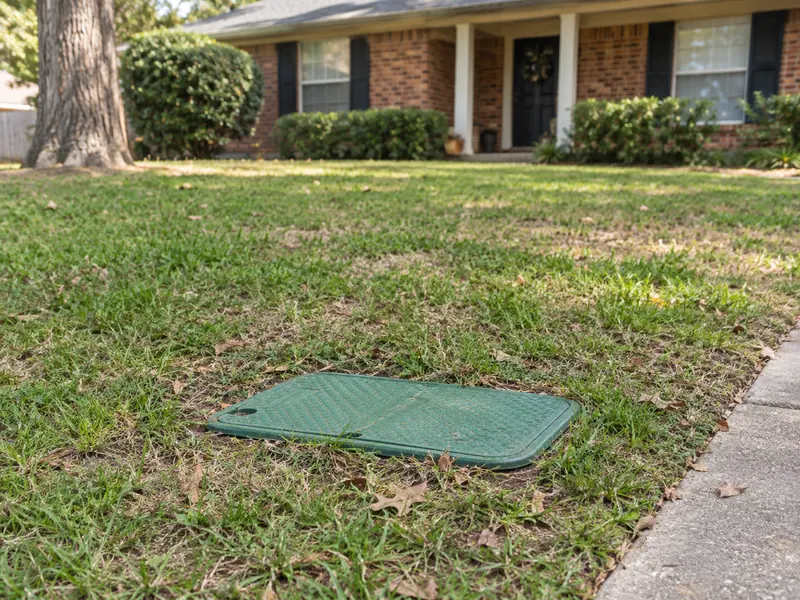
Lines that may stay unmarked
- Look for
- Find the meter box and the place the water enters the house. Do the same from the cleanout toward the street.
- What it tells you
- In Columbia Water’s area, the line from meter to house and the sewer up to the property line are the homeowner’s2. Private lines may not be marked, so ask when you file1.
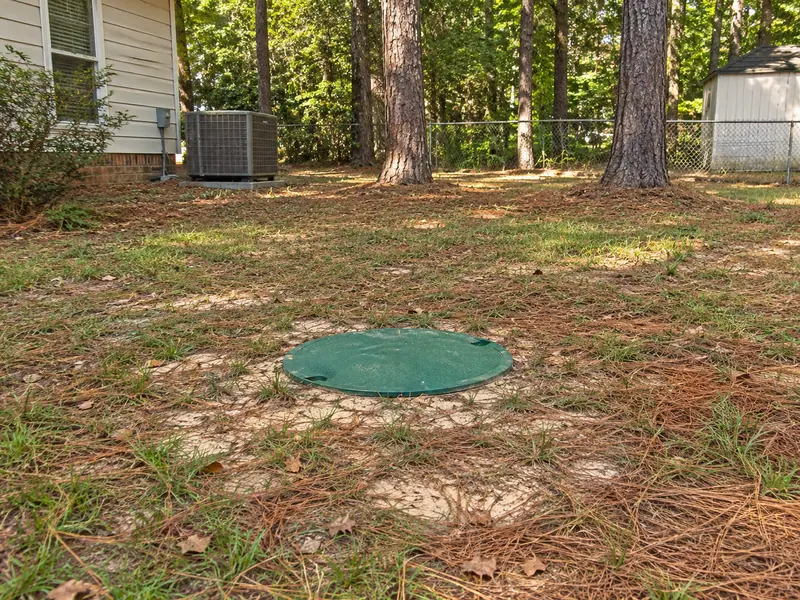
Septic in the way
- Look for
- On septic, find the tank and work out the likely field before you plan a fence, a trench or a tree.
- What it tells you
- Clemson says not to drive, dig, build or plant deep-rooted plants over a septic system3. Don’t count on locators to show it. Ask.
Does a small job count?
Yes. SC811 applies to a project of any size1, so a fence post or a shrub counts the same as a trench.
Yours to do
- File with SC811 at least three business days before you start1.
- Wait for the marks and keep them visible until the job is finished.
- Sketch your own private lines from what you can see, and keep the sketch with the house papers.
- Move a new tree if it lands near a sewer line. Roots are slow, but they get there.
For a licensed pro
- Finding private lines. Ask a plumber whether they can trace yours, or who can.
- Repairing a water or sewer line you’ve hit on your side of the meter or property line.
- Anything struck that belongs to a utility goes straight to that utility.
A short film for this stop
A homeowner tells how moving a small mailbox nicked a gas pipe and shut down the block, and why a free 811 call comes first; in South Carolina, allow at least three business days. From Pacific Gas & Electric, an outside channel; it loads from YouTube only when you press play.