 Water where it shouldn't be
 Pipes that might be old
 A freeze is coming (AI picture)
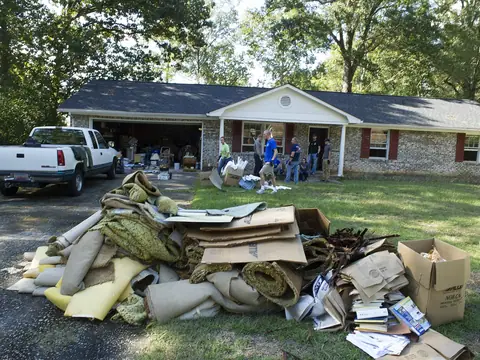 After a flood
 A smell you can't place
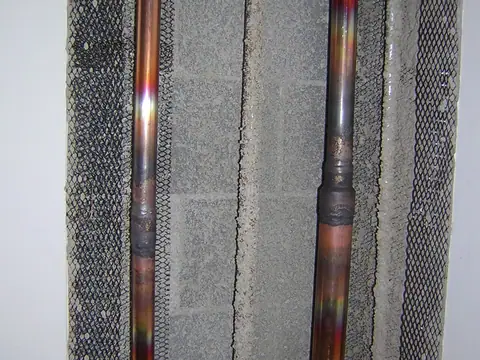 Who to call and what they need
 Whose water, town by town
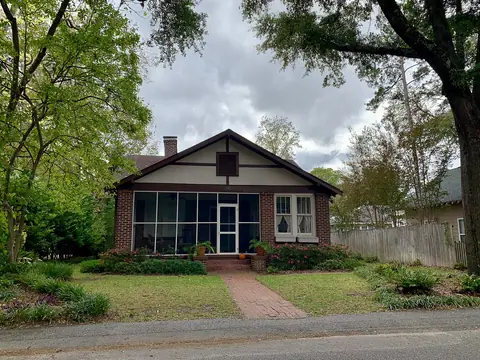 Every picture on the walk
Side of the house, stop 2 of 4
Water heater closet or garage: what to look at
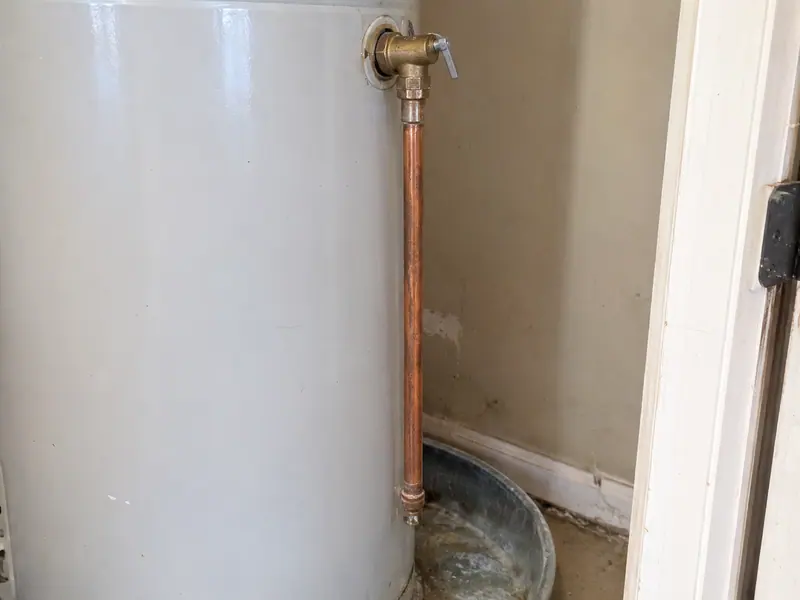
In a water heater closet or garage corner, look for four things: water in the pan or on the floor, rust at the base, a shutoff you can find,1 and the temperature, which CPSC says to set at 120°F.2
Stand in the doorway of the closet or garage corner with a flashlight and keep your hands off the tank.
Updated , Midlands House Walk
Smell gas or propane near the heater? Get everyone out before anything else. Use no switches or phones inside. Once outdoors, call 911 and your gas company or propane supplier.4 Then read a smell you can’t place.
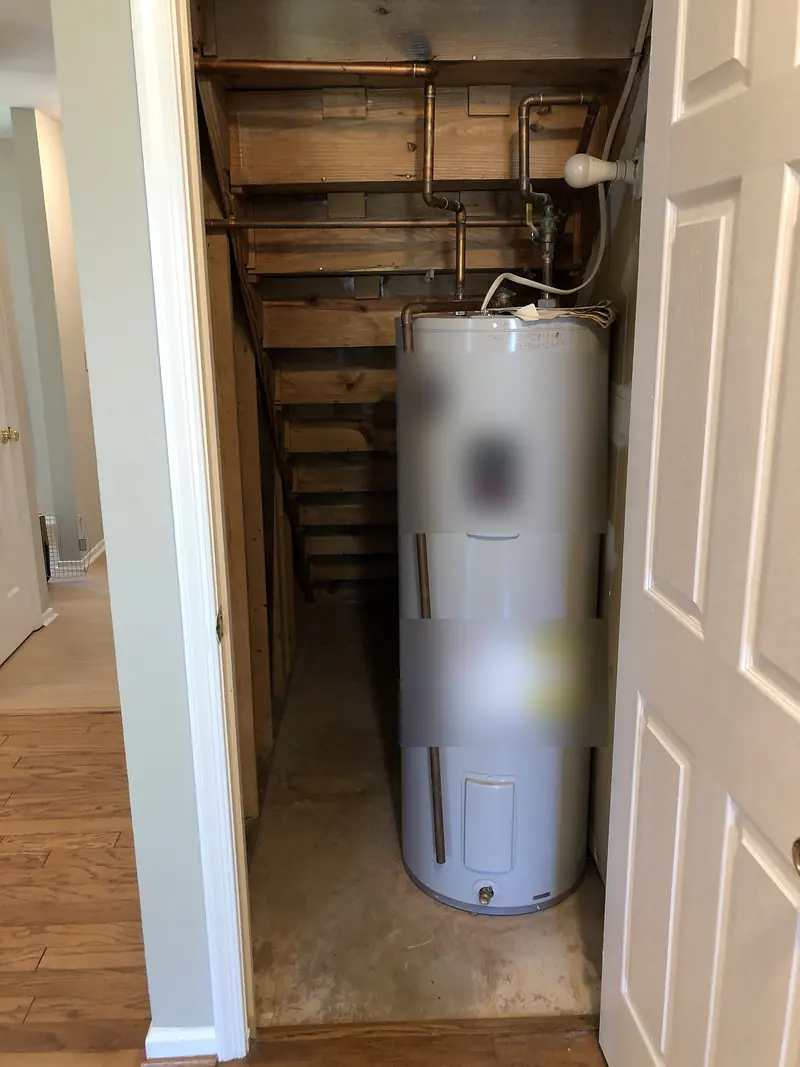
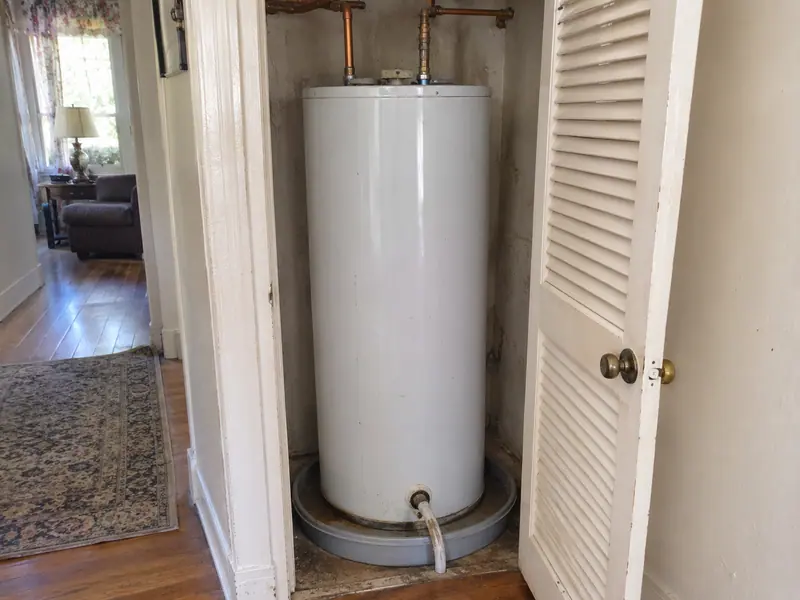
Is anything in the pan?
- Look for
- Shine the light all the way round the base. A puddle, a crust of minerals or orange streaks all count.
- What it tells you
- A wet pan or floor means water is getting out of the tank or the pipes above it. Moisture control is the key to keeping mold away,3 so get a plumber in soon and dry the closet.
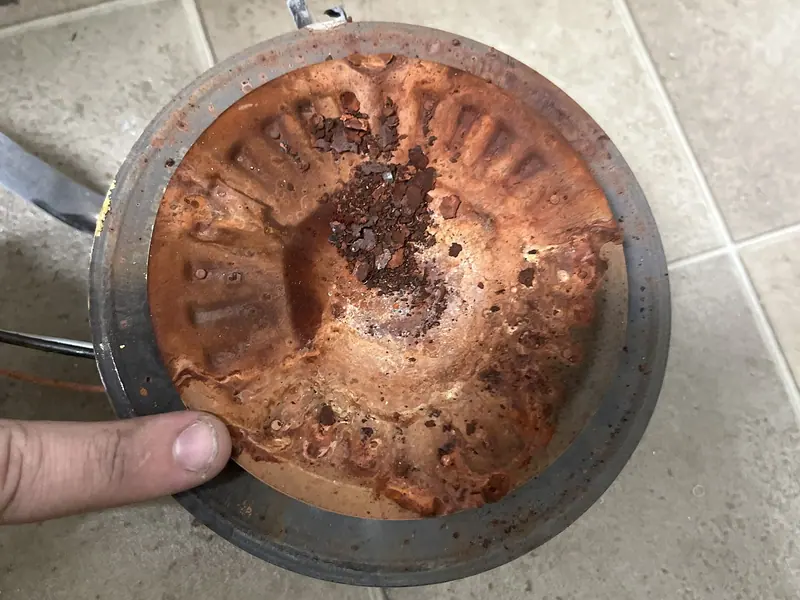
Is there rust at the base?
- Look for
- From the doorway, look for orange streaks and flaking along the bottom edge and at the pipe joints on top. Leave every cover and panel where it is.
- What it tells you
- Rust on a tank is for a plumber to judge. Paint won’t stop it. Mention the heater’s age if you know it.
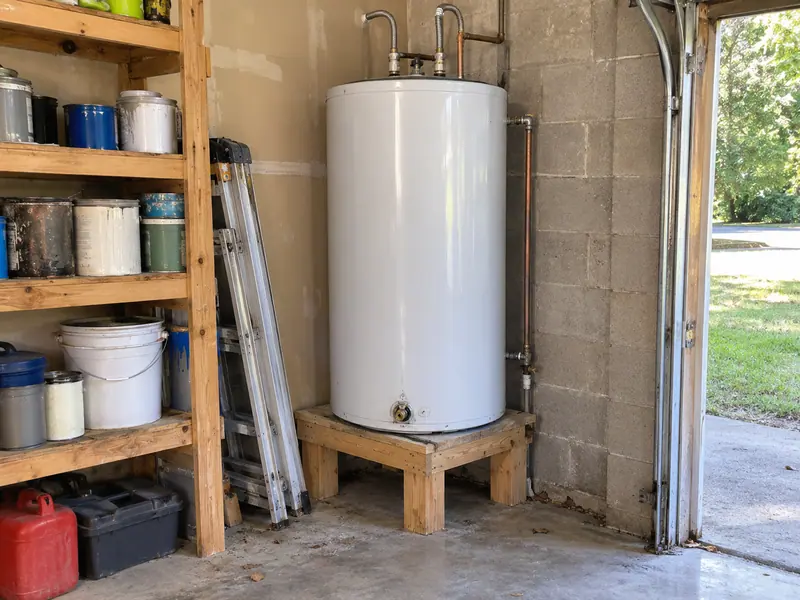
What's around the heater in a garage?
- Look for
- Note whether the stand looks solid and level, and whether boxes, rags or cans are piled against the tank.
- What it tells you
- Move the clutter away, and keep fuel cans, paint and solvents well clear of it. Why a heater sits on a stand, and what yours needs, are questions for a plumber or your local building office.
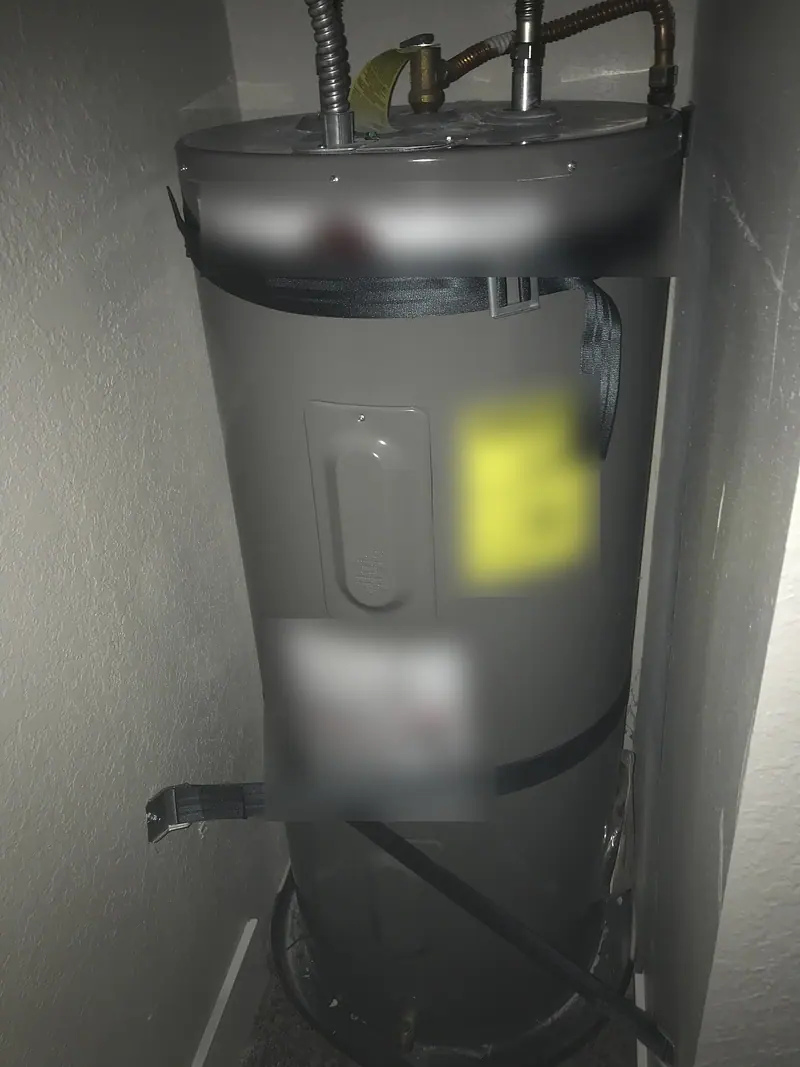
Can you find the heater's shutoff?
- Look for
- Trace the pipes rising from the top of the tank. Clemson says to find the water heater shutoff before freezing weather, and above the heater is a common spot.1
- What it tells you
- That valve stops water to the heater only. The whole-house valve is on the house shutoff stop. Whether your heater needs straps is one to ask the building office.
How do you get it to 120°F?
CPSC’s figure is 120°F, and children under five and older people are most at risk from hotter water.2 Heaters differ, so go by your manual or ask a plumber. Don’t go opening panels to find out.
| Water temperature | Time to a third-degree burn |
|---|---|
| 150°F | 2 seconds |
| 140°F | 6 seconds |
| 120°F | Five minutes |
Yours to do
- Keep the area clear and look at the base now and then.
- Learn where the heater’s water shutoff is.1
- Take a picture of the label so a plumber has the model on hand.
For a licensed pro
- Any leak, rust or wet pan.
- Anything to do with burners, flues, gas lines or wiring.
- The pipe down the side of the tank, if it’s wet: see the relief pipe stop.