 Water where it shouldn't be
 Pipes that might be old
 A freeze is coming (AI picture)
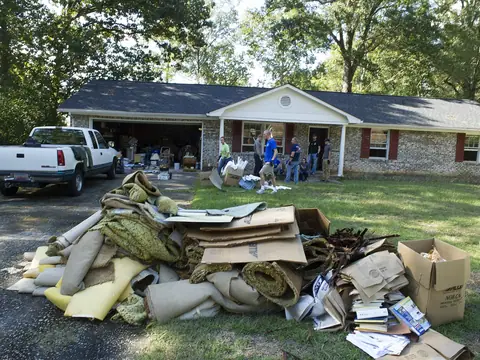 After a flood
 A smell you can't place
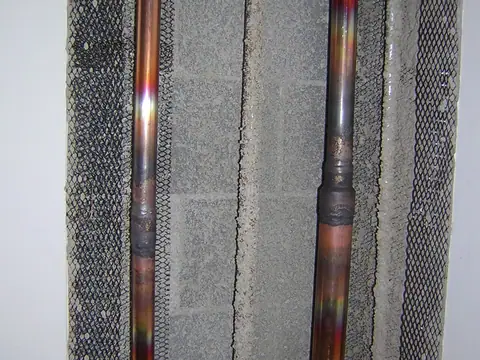 Who to call and what they need
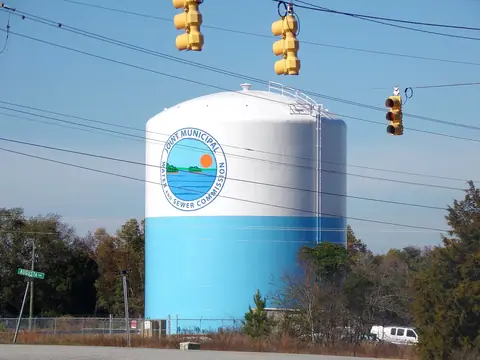 Whose water, town by town
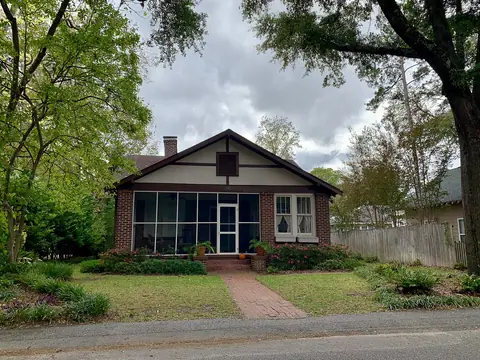 Every picture on the walk
Side of the house, stop 3 of 4
The pipe coming down from your water heater
The water heater relief valve pipe carries hot water away when the tank’s relief valve opens, so its end has to stay open. Never plug or cap it. If it’s dripping or the end is wet, get a plumber, and stay clear because hot water can scald.1
Stand in the doorway of the water heater closet or garage and follow the pipe from the brass valve near the top down to where it ends.
Updated , Midlands House Walk
Don’t put a cap, plug or bucket-and-hose fix on this pipe, even if the drip is annoying. It’s there as a way out for hot water, and the drip is telling you something’s wrong.
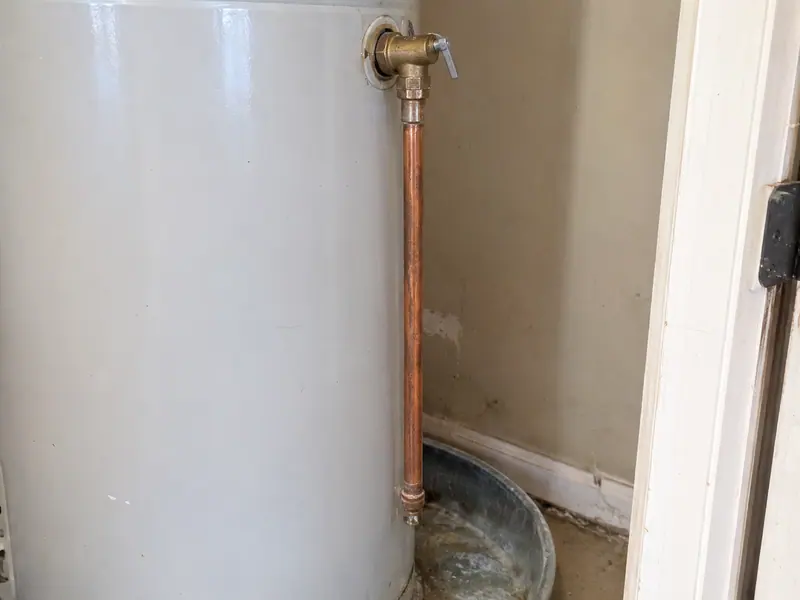
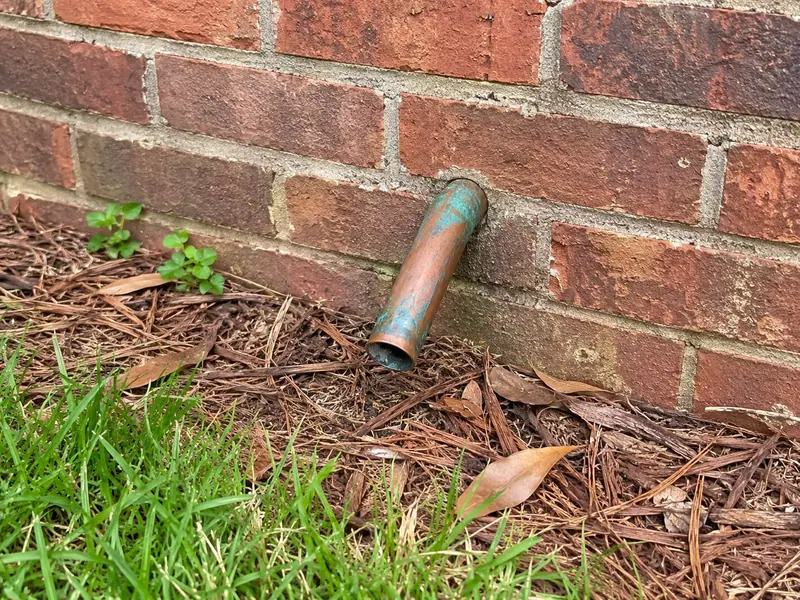
Does it end outdoors?
- Look for
- Check the outside wall near the heater closet, low down. Look for a stub of pipe, and for stains, wet mulch or worn soil beneath it.
- What it tells you
- Wet ground under it means the valve has let water out, or is leaking. Keep children and pets clear and tell a plumber. Where yours ought to end is one to ask a plumber or the local building office.
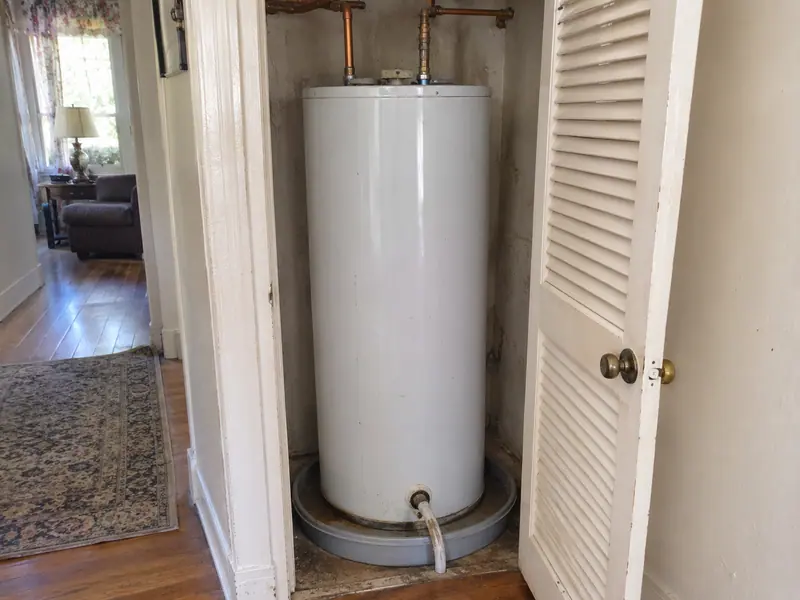
Does it end at a pan?
- Look for
- Look at the pan under the pipe end for water, drip marks or mineral crust. Leave the gap below the pipe open and clear.
- What it tells you
- A wet pan could be this pipe or the tank itself, and a plumber can tell which. Fix leaks early, because damp in a closed closet stays put.3 The water heater stop covers the rest of the closet.
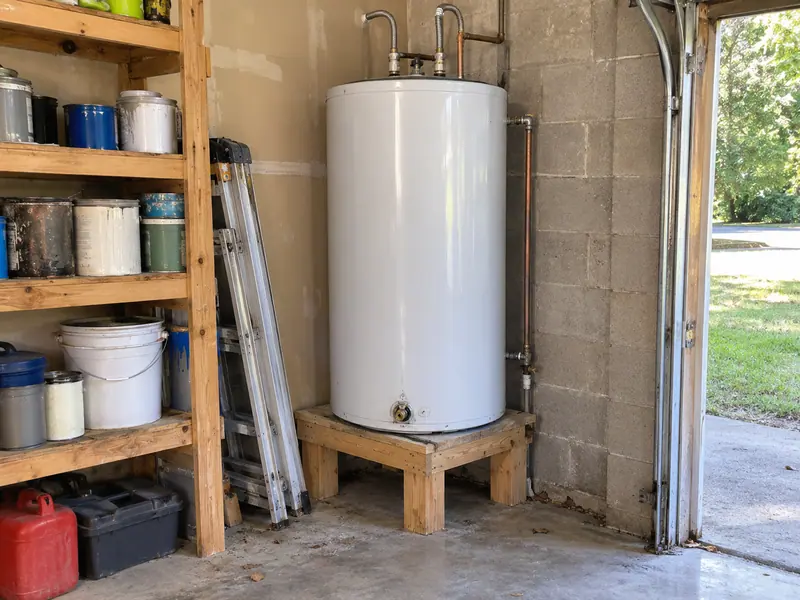
Is anything blocking the run?
- Look for
- Walk the full length with your eyes. Look for kinks, boxes pressing on it, or a cap or plug someone has added at the end.
- What it tells you
- A cap, a plug or a crushed section means the pipe can’t do its work. Don’t try to clear it yourself. Book a plumber today and say what you found.
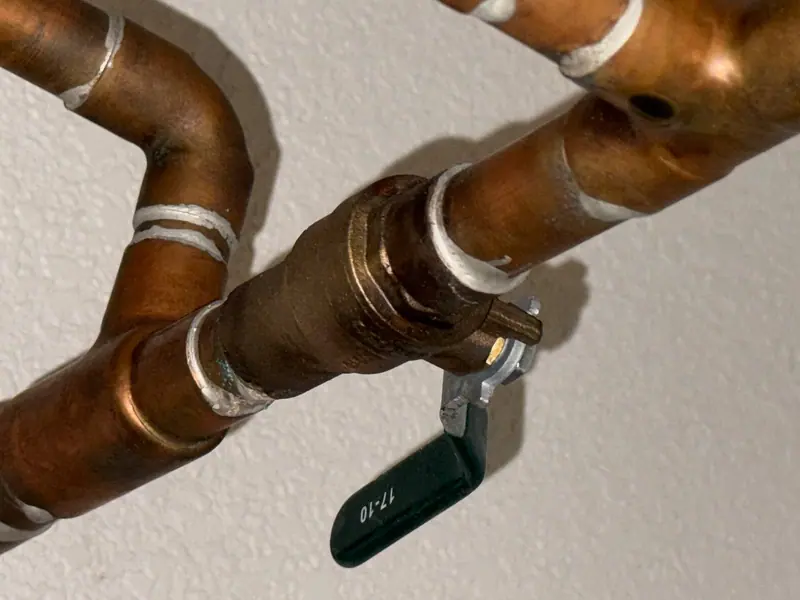
Do you know where the water shutoffs are?
- Look for
- Find the valve for the heater, often above it,2 and the main shutoff for the whole house, while everything’s calm.
- What it tells you
- If the pipe is running hard or steaming, the tank may be overheating: get everyone away from it and call 911 from outside. A slow drip is the one to phone a plumber about, and knowing your shutoffs helps with that call.
Should you test the valve yourself?
No test steps here, on purpose. What comes out is hot, and CPSC puts third-degree burns at 2 seconds for 150°F water.1 That lever is for a plumber to work.
Yours to do
- Follow the pipe and learn where it ends.
- Keep its end and the space below it clear.
- Note any drip, stain or crust, with a picture, for the plumber.
For a licensed pro
- Any drip or wet end at all.
- A new relief valve, or a pipe that’s capped or kinked.
- Any testing of the valve. See who to call.